
Complete Guides · Odor Control
Why "Annual Chute Cleaning" is a Losing Battle
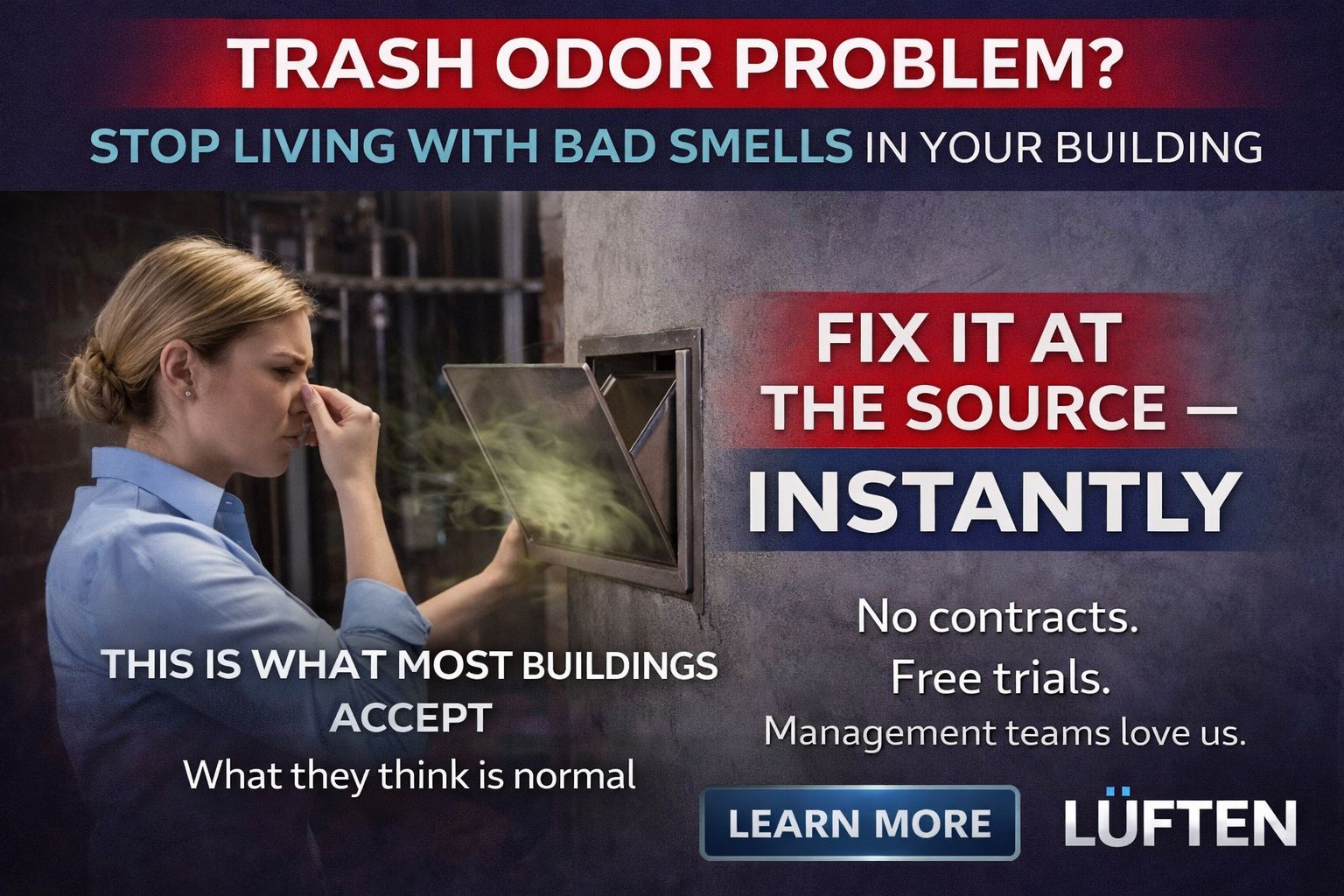
The Myth: "Trash chutes are supposed to smell." Many building managers treat chute odors as an inevitable part of high-density living, defaulting to a reactive deep clean — thousands of dollars on pressure washing and deodorizing once or twice a year. The Reality: just like a hallway floor gets dirty the moment a tenant walks in with muddy shoes, a trash chute is re-contaminated the very first time a bag is dropped after a cleaning. Cleaning removes the surface grime, but the source — the constant introduction of organic waste — never stops. Within 48 hours, the rotting waste, grease, and bacteria are back, and the odor begins its ascent through the elevator shafts and into tenant hallways.
The Challenge
What we walked into
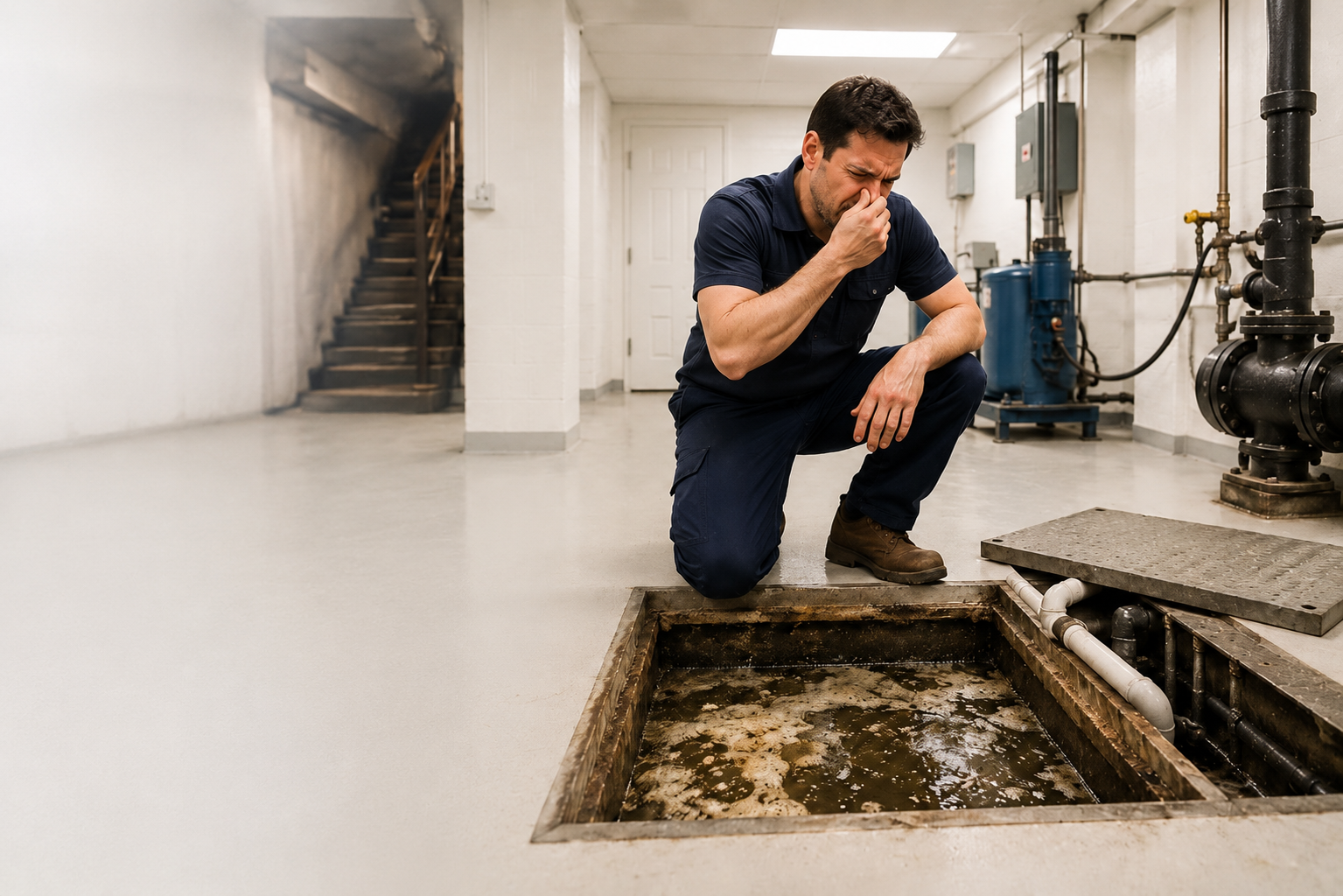
When a trash system fails, it isn't just an odor issue — it's a structural and sanitary liability. The "building smell" travels through shafts and into expensive apartments, eroding the high-end brand identity owners pay a premium for. Rotting organic buildup acts as a primary food source for flies, roaches, and rodents, creating a vector crisis the porter team can't out-clean. And as NYC temperatures hit the 80s, microbial activity accelerates — leading to a summer surge in tenant complaints, service tickets, and health code risk just when the building is most visible to guests and prospects.
The Solution
How Luften approached it
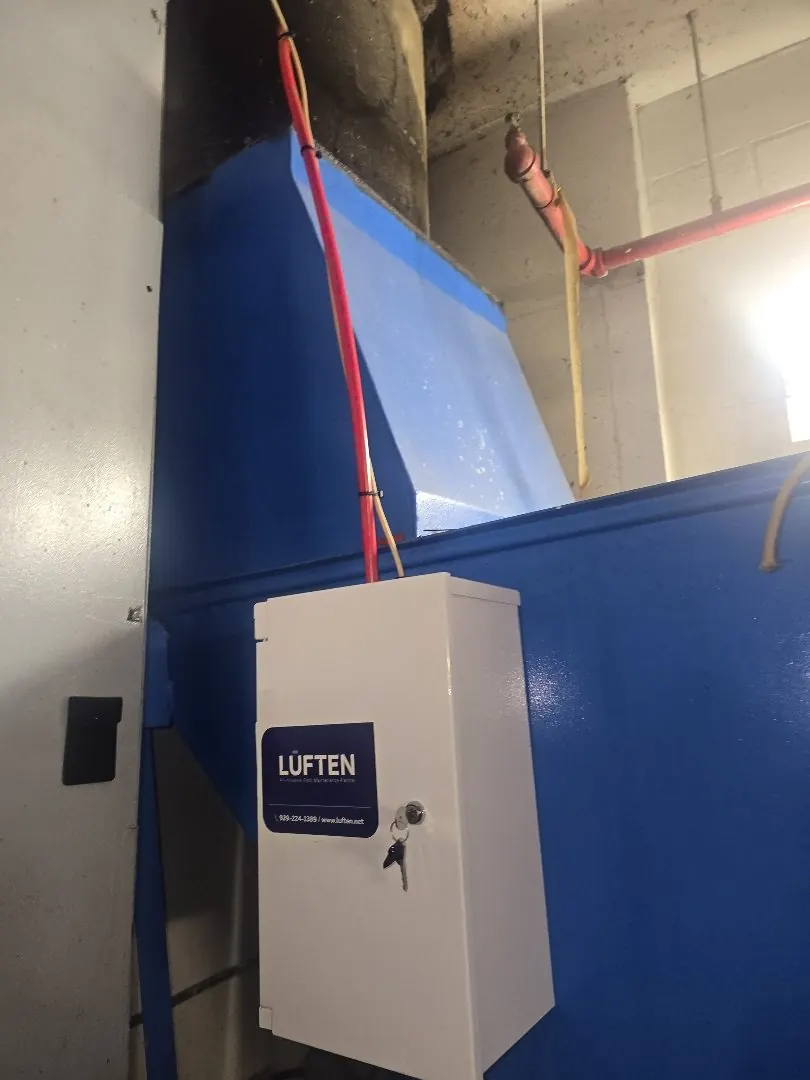
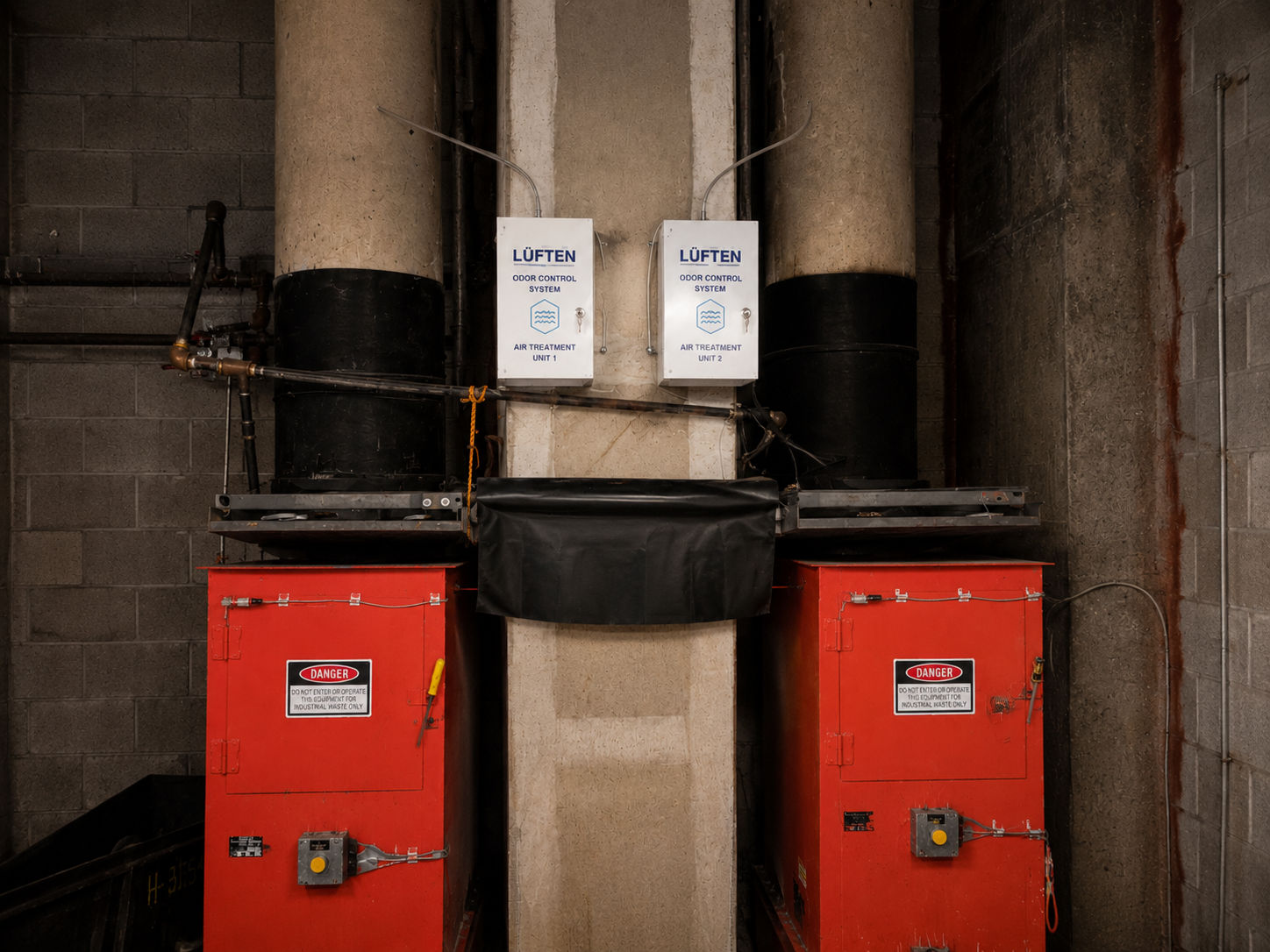
Luften's approach shifts the paradigm from reactive cleaning to constant remediation. We installed our proprietary, USA-built system to treat the entire waste stream simultaneously: continuous neutralization of airborne particulates inside the chute, targeted treatment in the trash room where the highest concentration of waste sits, and a dedicated dose at the compactor — the point of greatest friction — to break down grease and organic buildup before it can off-gas.
Equipment like this is installed, calibrated, and serviced monthly by our own technicians.
The Results
What changed
Instant neutralization: total odor elimination within minutes of the initial installation. Zero-lag maintenance: the system runs 24/7, so there is no "buildup period" between service calls. Tenant satisfaction: a complete cessation of hallway and elevator odor complaints, even during peak summer heat. Operational savings: eliminated the need for frequent, costly emergency pressure washing and masking chemical sprays. The takeaway: "building smell" is not a fact of life — it's a symptom of a failing maintenance strategy. By automating the remediation process, luxury facilities maintain their high-end brand identity from the lobby to the trash room.
Get a quote for your upcoming project.
A Luften engineer will scope, price, and schedule a walk-through within 48 hours.