
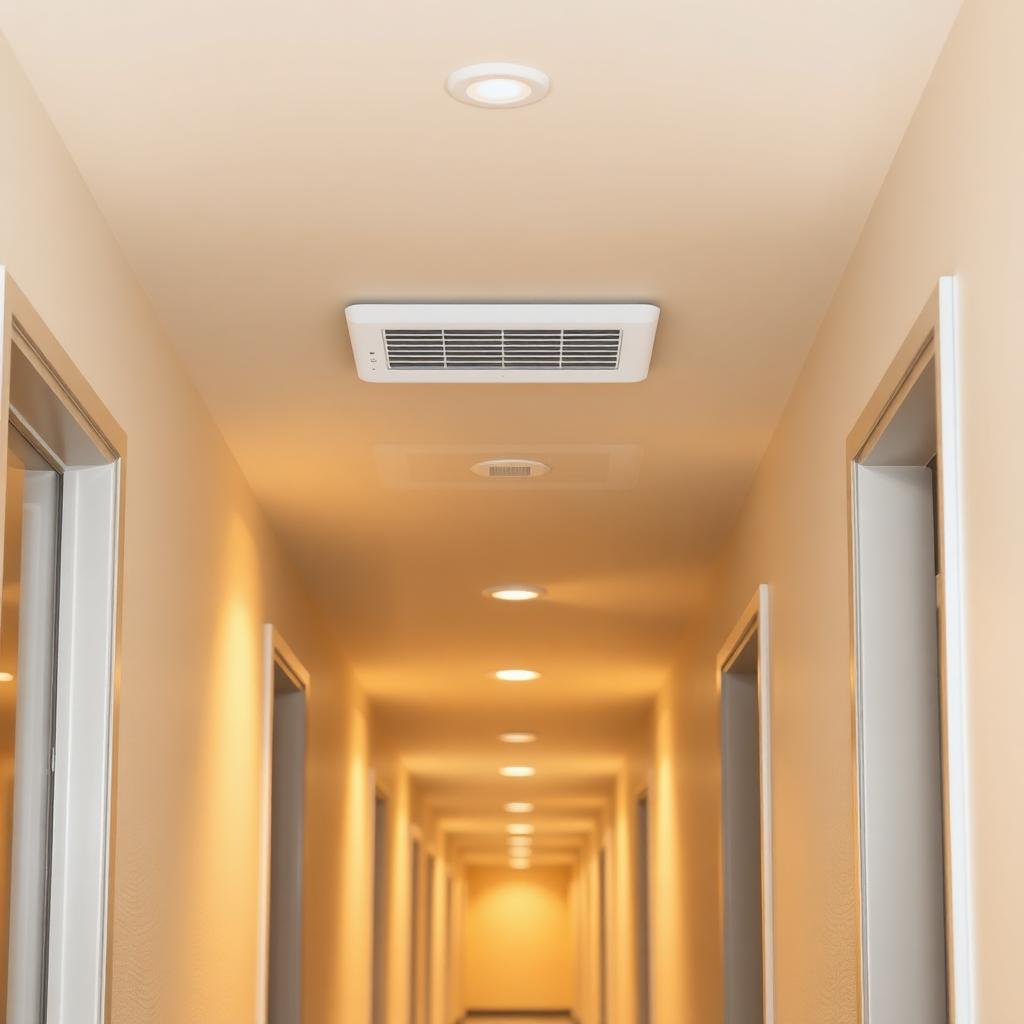
A new tenant signs a three-year lease on a luxury corner unit, but within forty-eight hours, they are in your office complaining about a persistent, skunky aroma seeping through the vents and electrical outlets. Despite your building’s strict non-smoking policy, the smell of cannabis or tobacco from a neighboring unit has permeated the drywall and common hallways, creating a friction point that threatens retention rates. You have already sent the standard compliance notices, but the physical scent remains trapped in the building’s fabric, lingering long after the source has stopped. The lobby smells like a stale basement, and the turnover team is reporting that standard cleaning solutions are not touching the yellowed residue on the ceilings of the problem unit.
How do you effectively neutralize volatile organic compounds without disrupting other residents? Is a portable air scrubber sufficient for a deep-seated smoke issue, or does the building require a permanent integration into the HVAC system? When does a simple cleaning protocol transition into a specialized chemical remediation project?
At Luften, we design and implement engineered odor-control programs for high-density residential environments across the NYC tri-state area. It can be tricky to navigate the physics of air travel in old and new construction alike, but there is a right answer for your specific building layout.
**This guide examines the chemistry of smoke and cannabis odors, the mechanical limitations of traditional air fresheners, and the specific remediation technologies—from molecular encapsulation to vapor phase diffusion—that property managers must utilize to maintain a premium residential environment. By the end of this article, you will understand how to select a remediation strategy based on your building’s airflow and the severity of the saturation.**
Molecular Encapsulation vs. Traditional Masking Agents
Most off-the-shelf solutions for smoke odors rely on masking agents, which are heavy perfumes designed to sit on top of the offensive scent molecules. In a multifamily setting, this creates a 'floral smoke' effect that many residents find more offensive than the original odor. To truly eliminate the smell of cannabis or tobacco, you must utilize molecular encapsulation, a process where a neutralizing agent attaches to the odor molecule and changes its structure so it can no longer be detected by human olfactory receptors. **Effective smoke remediation requires a chemical reaction that alters the odor’s molecular weight rather than just adding a secondary scent to the air.** Because smoke is composed of microscopic particulates and gases that penetrate porous surfaces like drywall and carpet, the neutralizing agent must be fine enough to follow the same path as the smoke itself.
Vapor Phase Technology vs. Ozone Generation
When a unit is occupied, your options for aggressive remediation are limited by safety protocols. Ozone generators are often cited as the gold standard for smoke removal, but they are highly reactive and require the space to be completely vacated by humans, pets, and plants due to respiratory risks. For active multifamily environments, dry vapor phase technology is the superior alternative. These systems use a blend of essential oils and compounds delivered as a dry vapor—not a mist or spray—that permeates the air and surfaces without leaving a residue or requiring evacuation. **Vapor phase systems are the most effective way to treat active smoke issues in common areas and hallways because they provide continuous neutralization without the safety hazards associated with ozone or hydroxyl generators.** This technology works by diffusing the neutralizer into the air stream, where it seeks out and pairs with malodor molecules in real-time.
HVAC Integration vs. Point-of-Source Treatment
If the smoke odor is localized to a single unit, point-of-source treatment using portable canisters or localized vapor units is usually sufficient. However, if the odor has entered the building’s internal ventilation or is migrating through the 'stack effect' in high-rise structures, you must look at HVAC integration. By installing a delivery system directly into the supply air plenum, you can treat the air as it moves throughout the entire floor or building. **Systemic odor issues caused by smoke migration through shared ventilation shafts require an HVAC-integrated solution to ensure the neutralizer reaches every square inch of the building’s footprint.** This method ensures that the air pushing into a resident's apartment from the hallway or vent is already treated, preventing the 'seepage' complaints that typically plague property managers.
Porous Surface Saturation and Deep Remediation
In cases of long-term tobacco use or heavy cannabis consumption, the odors are no longer just in the air; they are embedded in the building’s substrate. The tars and resins from smoke act as a binder, sticking to paint and insulation. If a unit has been vacated and the smell persists after a deep clean, you are dealing with surface saturation. At this stage, airborne treatments must be paired with specialized counteractants added to paint primers or used in high-pressure fogging to reach the backside of drywall and inside cabinetry. **Deep-seated smoke remediation in turnover units requires a multi-stage approach that addresses the microscopic resin layer before the unit is repainted or re-carpeted.** Failing to address the surface saturation will result in the odor 'off-gassing' weeks later when the temperature or humidity in the building rises.
Choosing the Right Program for Your Property
Selecting a remediation strategy depends largely on whether the issue is chronic or acute. For luxury buildings where brand image is paramount, a permanent vapor phase system in the lobby and corridors serves as a proactive defense against various odors, including smoke and food smells. If you are dealing with a one-time turnover of a heavy smoker's unit, an intensive, short-term treatment with high-output neutralizing dry vapor is the more cost-effective route.
Consider the airflow of your building. Older NYC buildings with shared air shafts will almost always require a more systemic approach than modern glass towers with independent energy recovery ventilators (ERVs) for each unit. The goal is to match the delivery method to the way air naturally flows through your specific architecture.
Have a question or need support? Our team is here to help — we'll connect you with the right expert.