
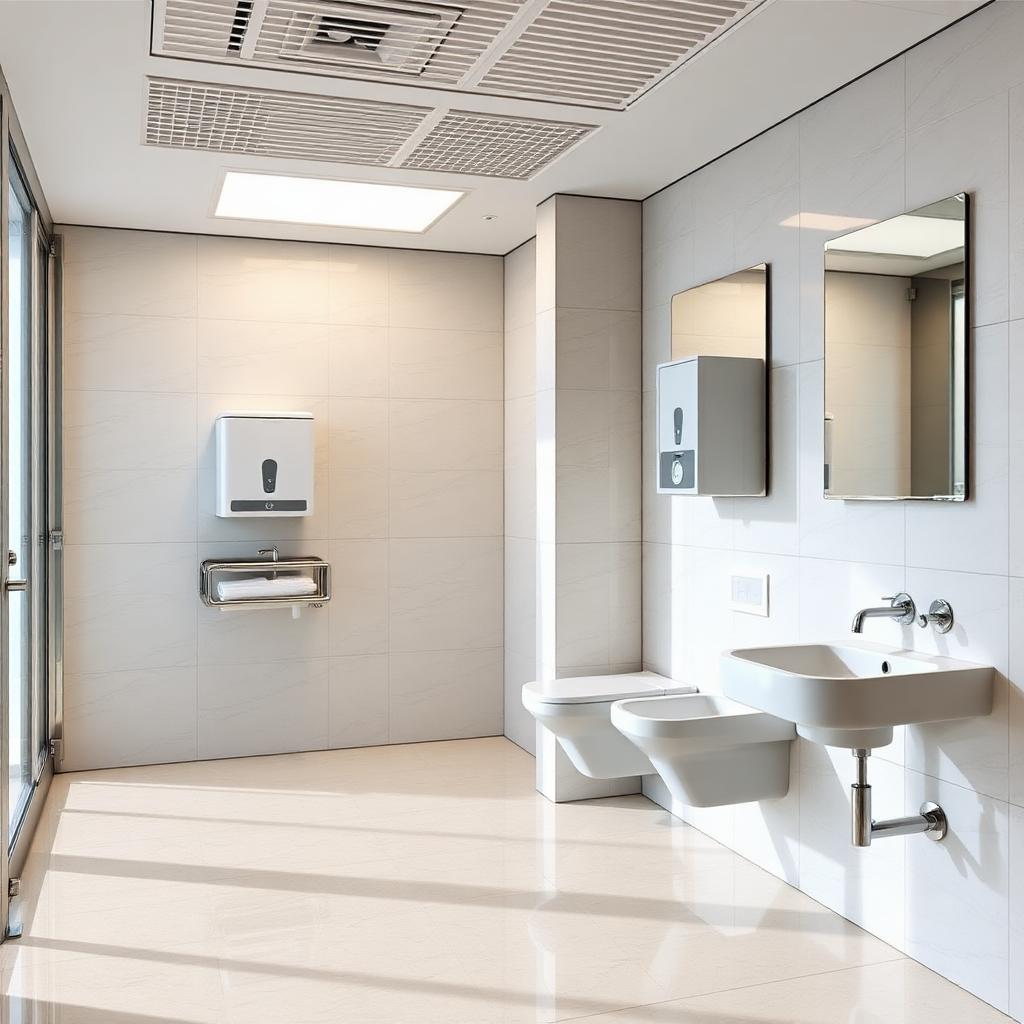
High-traffic restrooms produce odor on a curve the porter schedule does not match. By 11am the place smells, and the next scheduled service isn't until 2pm.
Odor Control · May 6, 2026 · 5 min read
Restroom Odor Control for High-Traffic Commercial Restrooms
Class A office, hospitality, and stadium restrooms generate odor faster than any cleaning schedule can keep up with. Always-on dosing fixes it.
By Luften Team
All posts
Field Tips
Related tips you can put to work today
Restroom Odor Control & Air Fresheners
Restroom smell is 80% urine salts on grout and 20% ventilation. Commercial air fresheners come last.
- 1Deep-clean grout monthly with an enzymatic cleaner — bleach won't touch urine salts.
- 2Verify exhaust fans move air at least 2 CFM per sq ft; test with a piece of tissue.
- 3Install continuous passive dispensers on the return-air path, not above the urinal.
- 4Replace urinal traps every 12 months in high-traffic restrooms; sediment holds odor.
- 5Waterless urinals need cartridge changes on schedule — a skipped change smells worse than a regular urinal.
- 6Check floor drains weekly for dry traps; a dry trap in a restroom is instant sewer odor.
- 7Use a light, clean fragrance — heavy floral in a restroom reads as a cover-up.
- 8Post cleaning logs on the door; guests smell what they see logged, not the reverse.
Restaurant Dining Room & Bar Odor
Guests smell your restaurant before they see the menu. Kitchen exhaust, restrooms, and the trash exit dominate.
- 1Ventilate the dining room independently from the kitchen; overlap forces grease vapor into the dining seats.
- 2Add a carbon polishing stage on the rooftop exhaust if neighbors complain.
- 3Fog the walk-in weekly with a food-safe treatment; walk-ins are hidden odor sources.
- 4Enzyme-treat bar drains daily — beer/wine sugars ferment fast in trap water.
- 5Post-dinner mop with an enzyme, not a fragrance — you're removing the biology, not covering it.
- 6Signature scent the entry vestibule only; scenting the dining room competes with the food.
- 7Isolate the trash exit from the arriving-guest path.
- 8Coffee grounds absorb kitchen odor — used grounds in the trash bin actually help.
Browse the full library at Luften's 400+ odor control tip guides.
#commercial restroom odor#high-traffic bathroom smell#urinal odor control#restroom deodorizer system
More from the blog
View allOdor Control
Pet Park and Dog Relief Area Odor: Outdoor Chemistry That Actually Holds
Dog relief areas in residential buildings are an amenity until they become a complaint. Here's how to keep them usable in 95° heat without daily power-washing.
Odor ControlSmoke and Marijuana Odor Removal in Multifamily Buildings
Cannabis smoke migrates through wall penetrations, HVAC returns, and shared plumbing chases. Here's how to eliminate it at the source instead of chasing it apartment to apartment.
Odor ControlWhy Does My Trash Chute Smell? The Real Cause in Luxury Apartment Buildings
Persistent trash chute odor in luxury buildings isn't a cleaning problem — it's a continuous-treatment problem. Here's what property managers need to know.