
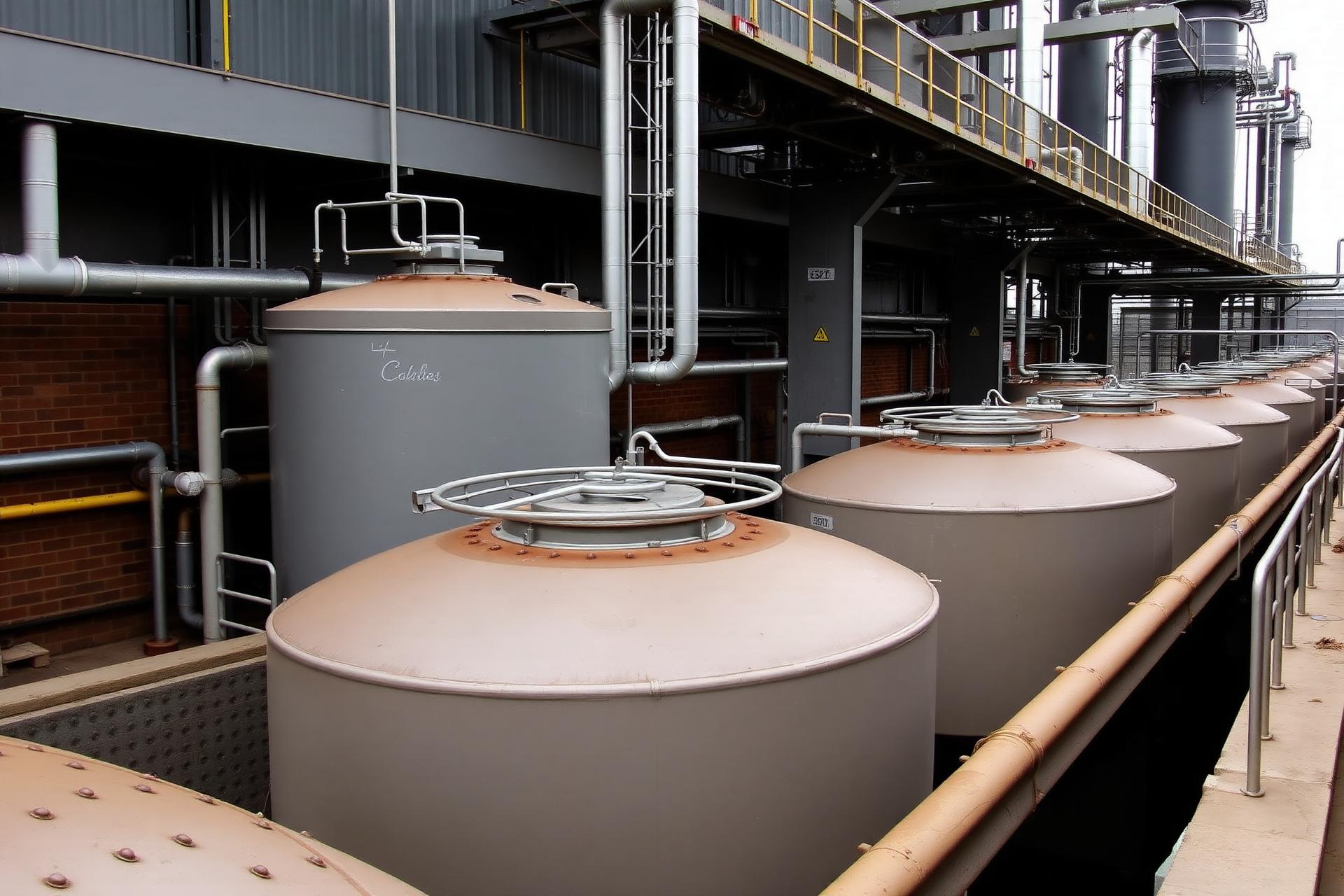
Sewer & Public Works
Hydrogen sulfide treatment, lift station care, and odor mitigation engineered for municipal sewer and waste infrastructure.
Engineered programs for sewer & public works.
Luften designs preventative and reactive programs tailored to your facility — automated dispensing, high-performance chemistry, and full-service support, without adding labor to your team. See our industrial odor control programs for related air, drain and wastewater treatment.
Municipal sewer infrastructure produces hydrogen sulfide (H₂S) — a gas that corrodes concrete and steel from the inside out, threatens worker safety in confined spaces, and generates the rotten-egg odor complaints that fill council meetings. Lift stations, force main discharges, and gravity sewer transitions are the worst offenders, and reactive odor control with carbon scrubbers alone is expensive and incomplete.
Why surface treatment fails on its own
Spraying neutralizer at a manhole or running a carbon canister on a vent solves a symptom for hours. Meanwhile, the anaerobic biology in the wet well keeps producing H₂S, sulfide concentrations keep climbing, and concrete corrosion keeps accelerating. The problem is upstream of where most agencies fight it.
The LUFTEN approach for sewer & public works
We treat the wet well itself with calibrated biological and chemical dosing that suppresses sulfide formation at the source. Lift stations get programs sized to flow and detention time, with telemetry that reports dose volume, run-time, and tank levels back to operations. Manhole and vent-side odor is handled with targeted nebulization where residents are nearby. Every program ships with the compliance-grade reporting that public works directors need for council and DEP.
What changes for the agency
Lower H₂S concentrations measured at the discharge. Slowed concrete corrosion and extended asset life. Fewer odor complaints from neighborhoods adjacent to lift stations. And the documentation to prove all of it.
Where odor actually originates.
We map every facility zone to the engineering and chemistry that solves it — no generic playbook.
Lift stations & wet wells
In-well biological and chemical dosing suppresses H₂S formation at the source, not at the discharge.
Force mains & gravity transitions
Dosing programs sized to detention time eliminate the slug-release odor events at downstream manholes.
Manholes & vent stacks near residents
Targeted nebulization at the surface for hot-spot abatement adjacent to homes, schools, and businesses.
Treatment plant headworks
Pre-influent dosing reduces odor and corrosion load entering the plant — protecting infrastructure and neighbors.
The equipment behind the program.
H₂S Suppression Program
In-well biological and chemical dosing engineered for your flow, detention time, and sulfide profile.
Lift Station Telemetry & Reporting
Run-time, dose volume, and tank-level telemetry with compliance-grade monthly reporting for council and DEP.
Surface Odor Abatement
Targeted nebulization at manholes and vent stacks adjacent to residential, school, and commercial zones.
Programs matched to sewer & public works.
The service lines most requested by this industry — click through for scope, chemistry, and pricing.
From the LUFTEN journal.
Hydrogen Sulfide (H₂S) Treatment: Stopping the Rotten-Egg Smell at the Source
H₂S is corrosive, dangerous at concentration, and the source of the rotten-egg smell that haunts mechanical rooms and lift stations. Here's how to treat it instead of vent it.
Read article Waste WaterSewer Line and Lift Station Treatment: Continuous Biological Dosing Explained
Pump-outs are a maintenance task. Treatment is a program. The difference shows up in service intervals, odor complaints, and emergency call-outs.
Read article Waste WaterLift Station Care for Commercial Properties: Beyond the Vactor Truck
When a lift station is on a vactor-only program, every quarter is an unknown. A treatment program turns it into a controlled, documented system.
Read articleGet a quote for your upcoming project
A Luften engineer will scope, price, and schedule a walk-through within 48 hours.
From the blog
Have a technician walk your building
We map the garbage room, chute, compactor, drains and lobby, then quote one monthly program. Free walkthrough, free installation, no contract.
Book a free walkthrough
Tell us where the smell is. A Luften technician will walk the building — free assessment, no contract required.