
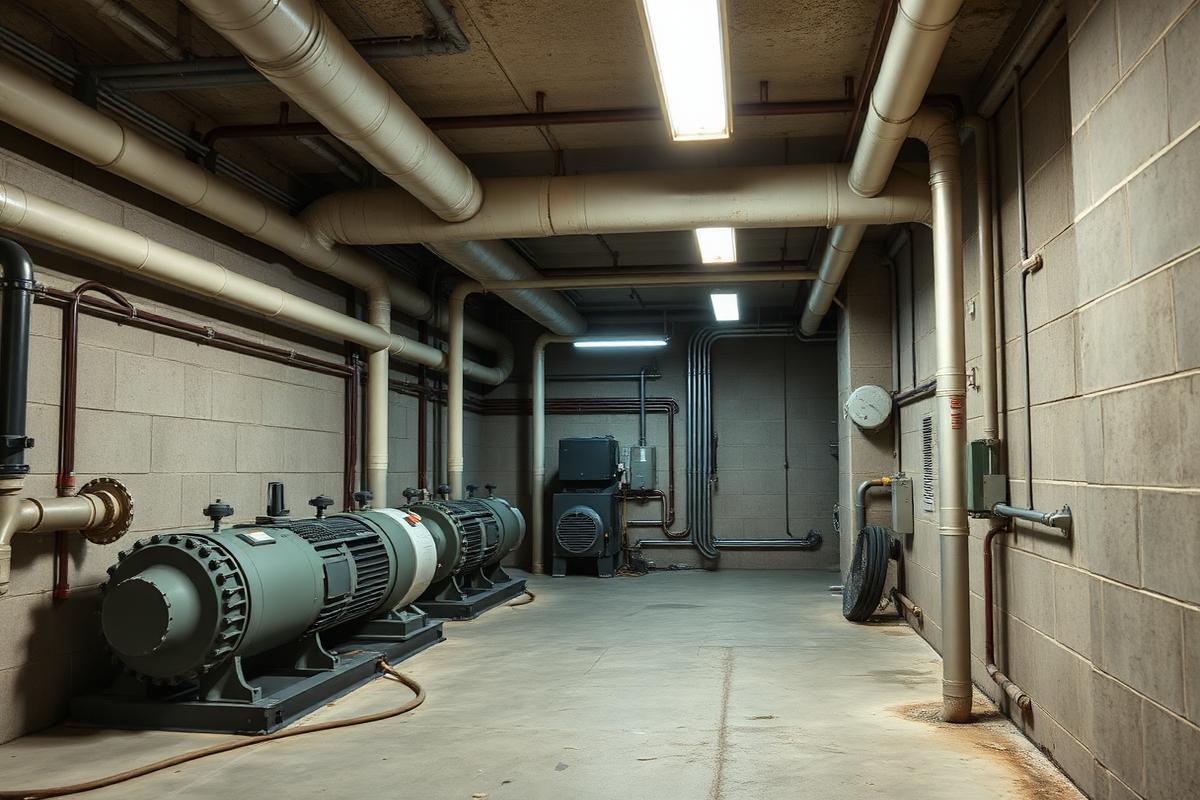
Commercial lift stations move building wastewater into the municipal main. When they fail, the failure is visible and expensive — basement backups, sewage overflows, code violations.
What a care program covers Continuous biological dosing for FOG and sludge, sulfide control for H₂S and corrosion, scheduled inspections, and dosing records ready for any compliance request.
The shift From reactive vactor calls to predictable monthly spend, with the data to defend it.
Commercial lift station treatment programs
A commercial lift station treatment program addresses the wastewater conditions that return after a physical cleanout. Luften combines continuous biological dosing for fats, oils, grease and sludge with sulfide control for hydrogen sulfide and corrosion. Dosing is matched to flow, retention time and load, so the program reflects the station rather than a generic calendar.
For facility managers and engineers, scheduled inspections and dosing records make the ongoing work visible. The team can review station condition, identify recurring buildup and connect odor complaints with the system generating them. Physical removal still has a role when accumulated material needs clearing; treatment manages the conditions between those visits.
Read about hydrogen sulfide odor control and treatment for source-focused dosing. If the building has below-grade wastewater equipment, the lift station and ejector pit comparison explains what each system collects and why the maintenance scope should match the equipment.