
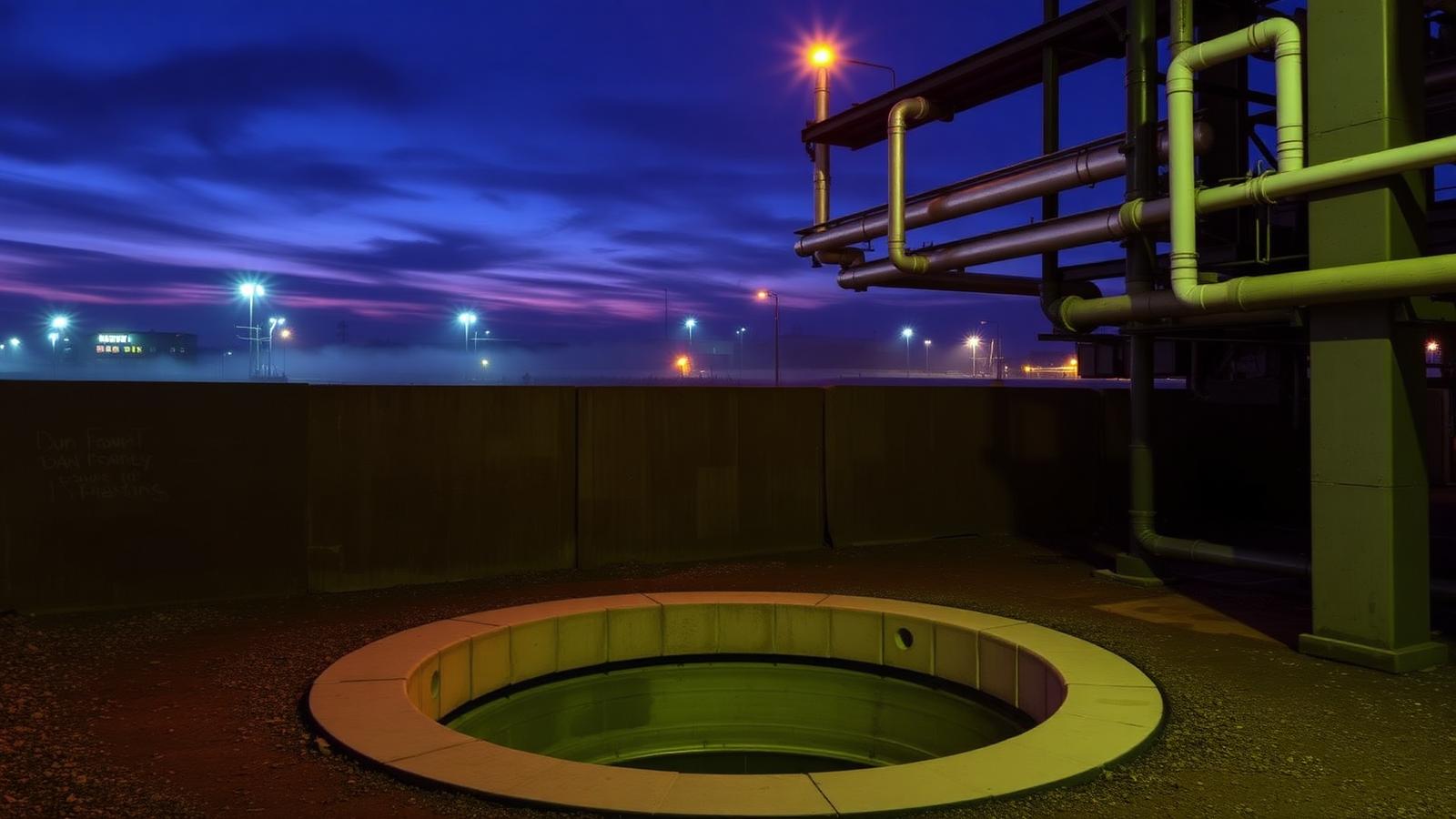
Picture this: it's a Tuesday morning and your operations manager calls to say the mechanical room on B2 smells like rotten eggs again. The vent stack on the roof has visible corrosion around the collar. A tenant on the ground floor emailed about a smell in the stairwell. Somewhere between the ejector pit and the sidewalk vent, hydrogen sulfide is doing exactly what it always does — and no one has a plan beyond "call the pumper."
Is this an odor problem, a corrosion problem, or a safety problem? Do you treat the air, the water, or the bacteria? And why does the smell always seem to come back within two weeks of a pump-out?
At Luften, we design continuous H₂S treatment programs for ejector pits, lift stations, sewer force mains, and grease interceptors across commercial and residential properties. It can be tricky to sort real solutions from vent fans and carbon canisters, but there is a right answer for your system.
To help you understand hydrogen sulfide and choose a treatment approach that actually holds, we'll cover how H₂S is produced, why venting and masking fail, the difference between chemical scavengers and biological programs, and how to measure whether the treatment is working. By the end, you'll be able to evaluate any H₂S proposal on its mechanism, not its marketing.
Where H₂S Actually Comes From Hydrogen sulfide is a byproduct of sulfate-reducing bacteria (SRBs) metabolizing organic matter in oxygen-poor water. Ejector pits, lift-station wet wells, force mains, and grease interceptors all provide exactly the environment SRBs need: warm, anaerobic, rich in sulfate and organic load.
The gas volatilizes out of the water surface, rises through vent stacks, and settles anywhere there's a low point — mechanical rooms, stair landings, sidewalk grates. The smell in your stairwell is not a ventilation failure; it is bacteria doing exactly what their biochemistry tells them to do.
Venting and Masking vs. Source Treatment The traditional response to H₂S is to move it: taller vent stacks, carbon canisters on the vent, fragrance dispensers in the mechanical room. Each of these has a place, and none of them treat the cause. The bacteria keep producing sulfide, the pipe crown keeps corroding, and the carbon canister loads up faster than anyone budgeted for.
Source treatment works upstream of all of that. By altering the chemistry of the water itself — either by binding sulfide before it volatilizes, or by suppressing the SRB population — the gas never enters the air in the first place. If you are still smelling H₂S after installing a vent solution, you are managing symptoms; the pipe is still corroding regardless.
Chemical Scavengers vs. Biological Programs Two families of source treatment dominate the market. Chemical scavengers (iron salts, nitrate-based products, peroxides) react with sulfide directly, converting it to non-volatile compounds. They work quickly and are ideal for shock treatment, spike loads, or systems with unpredictable inputs.
Biological programs introduce competing microbial populations that outcompete SRBs for the same organic substrate. They take longer to establish — typically two to four weeks — but produce a stable, self-sustaining suppression of sulfide generation at lower long-term chemical cost. For most commercial buildings with predictable daily flow, a biological program with a small chemical polish is the most cost-effective long-term answer; systems with erratic loads or seasonal spikes usually need a chemical-first design.
Continuous Dosing vs. Batch Dosing Even the right chemistry fails if it's delivered wrong. Pouring a five-gallon pail into the pit once a week creates a chemical spike, a short suppression window, and a gradual return to baseline before the next dose. The bacteria adapt around it.
Continuous metered dosing — a small pump feeding a calibrated volume into the wet well every few minutes — matches the treatment rate to the load rate. The goal is a flat sulfide reading at the discharge point, not a sawtooth.
What to Measure An H₂S program that can't produce numbers is not a program. At minimum you should have gas-phase H₂S readings at the discharge point, pump runtime and amp draw trends (corrosion shows up here first), and sacrificial metal coupons in the wet well for corrosion rate. **A vendor who cannot show you monthly trend data after ninety days is selling you deodorant, not a treatment program.**
Choosing the Right H₂S Program for Your Building Start by mapping every place H₂S might be generated: ejector pits, lift stations, grease traps, long horizontal sewer runs. Assess what's at risk — resident-facing air quality, mechanical infrastructure, regulatory reporting, or all three. Then match the chemistry to the load profile and insist on measurement from day one.
The right program is quiet, metered, documented, and integrated with the rest of your wastewater plan. It should shrink over time, not grow.
Have a question about H₂S in your ejector pit or lift station? Our team is here to help — we'll connect you with a wastewater specialist who can walk your system with you.