
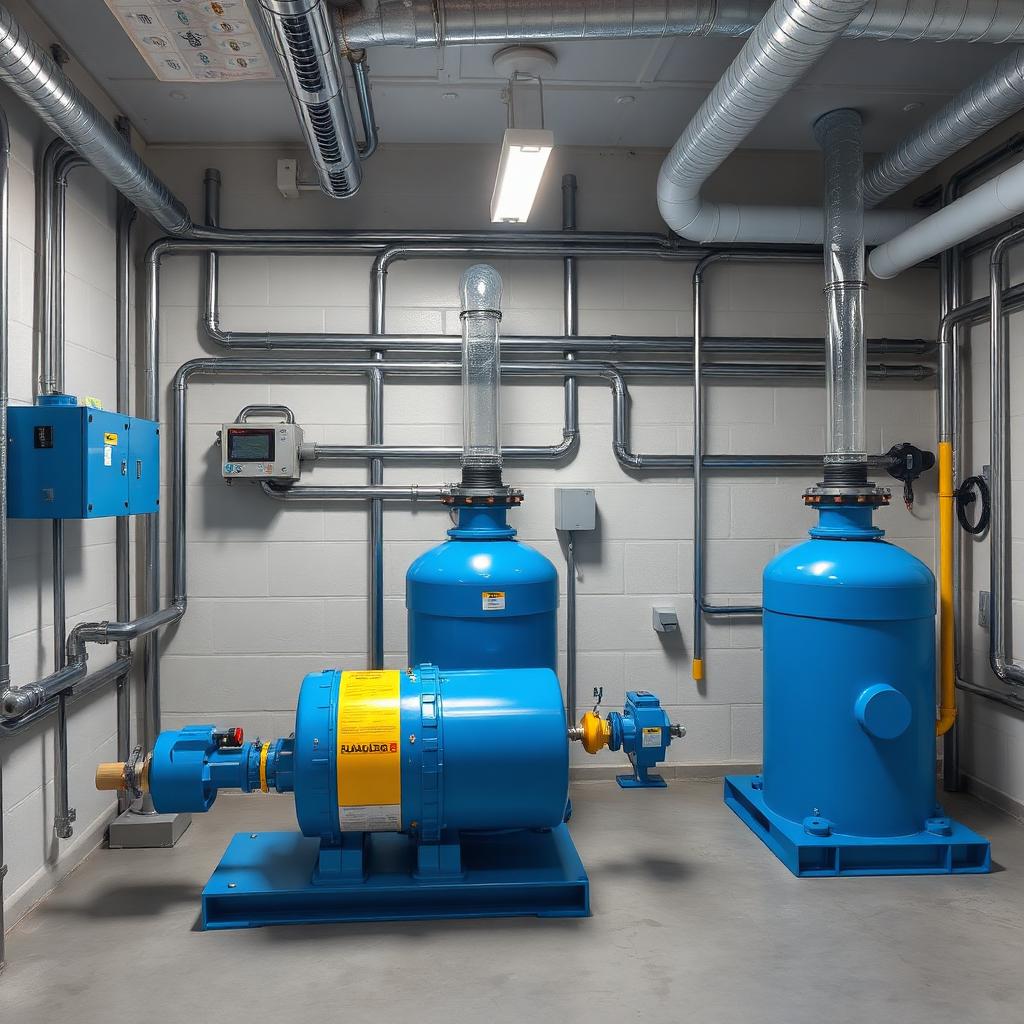
Lift stations and sewer mains accumulate fats, oils, grease, and biological sludge. Without continuous treatment, the only intervention is the vactor truck — which is expensive, scheduled around failure, and does nothing to address the cause.
Waste Water · April 22, 2026 · 7 min read
Sewer Line and Lift Station Treatment: Continuous Biological Dosing Explained
Pump-outs are a maintenance task. Treatment is a program. The difference shows up in service intervals, odor complaints, and emergency call-outs.
By Luften Team
All posts
Field Tips
Related tips you can put to work today
Lift Station Odor Control
Lift stations pump sewage uphill; the wet well is the loudest odor source in most buildings.
- 1Run a continuous vapor-phase dispenser in the wet-well headspace.
- 2Add an oxygen-releasing product to break down FOG inside the well.
- 3Confirm the wet well is sealed — a cracked access hatch pushes odor into mechanical rooms.
- 4Route the vent above the roofline and away from cooling towers, gardens, and windows.
- 5Snake the force main annually — grease inside the force main causes intermittent 'mystery' odors.
- 6Reduce hold-time: adjust float switches so sewage doesn't sit for hours between pumps.
- 7Never dump enzyme cleaners on top of a chemical program — they cancel each other out.
- 8Install a corrosion-resistant panel; H₂S will eat a standard control panel in 2–3 years.
The Luften Difference — Patented Chemistry
Luften runs a patented encapsulation and vapor-phase program that no other odor company has access to.
- 1Our chemistry captures odor molecules and rearranges them — it doesn't cover, it neutralizes.
- 2The program is patent-protected; competitors physically cannot replicate the formulation.
- 3One vendor manages chute, waste room, compactor, ejector pit, lift station, elevator pit, restroom, and scent — no juggling three contractors.
- 4Every dispenser is spec'd to airflow, temperature, and use pattern — not a stock install.
- 5Cartridges are swapped by our service team on a documented cadence — your staff never touches a refill.
- 6We provide quarterly reporting with H₂S measurements and complaint tracking.
- 7Our program is safe around residents, food service, and healthcare — no aerosol, no fire risk.
- 8White-glove install: coordinated with engineering, housekeeping, and the GM before day one.
Browse the full library at Luften's 400+ odor control tip guides.
#lift station treatment#sewer line biological dosing#wet well sludge reduction#FOG digestion lift station
More from the blog
View allWaste Water
Hydrogen Sulfide (H₂S) Treatment: Stopping the Rotten-Egg Smell at the Source
H₂S is corrosive, dangerous at concentration, and the source of the rotten-egg smell that haunts mechanical rooms and lift stations. Here's how to treat it instead of vent it.
Waste WaterLift Station Care for Commercial Properties: Beyond the Vactor Truck
When a lift station is on a vactor-only program, every quarter is an unknown. A treatment program turns it into a controlled, documented system.