
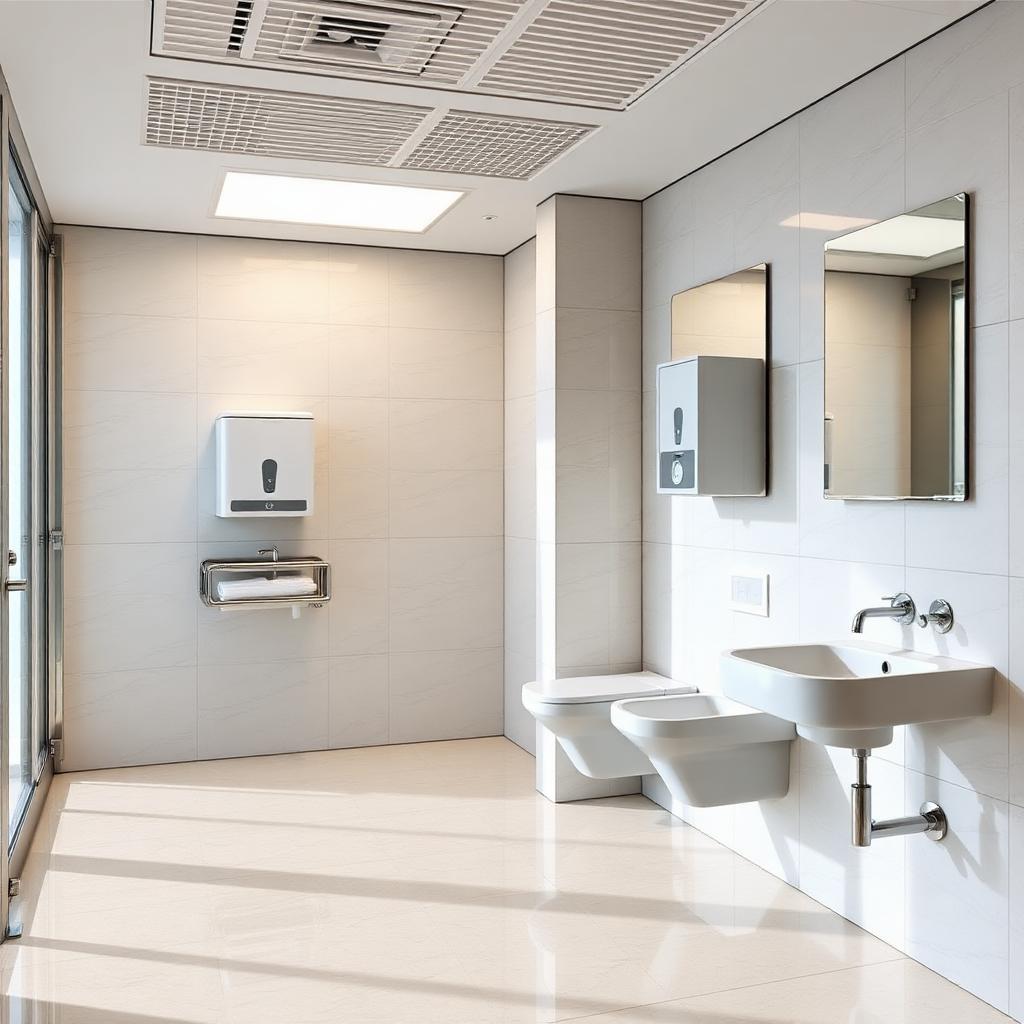
10 field-tested tips
- 1Deep-clean grout monthly with an enzymatic cleaner — bleach won't touch urine salts.
- 2Verify exhaust fans move air at least 2 CFM per sq ft; test with a piece of tissue.
- 3Install continuous passive dispensers on the return-air path, not above the urinal.
- 4Replace urinal traps every 12 months in high-traffic restrooms; sediment holds odor.
- 5Waterless urinals need cartridge changes on schedule — a skipped change smells worse than a regular urinal.
- 6Check floor drains weekly for dry traps; a dry trap in a restroom is instant sewer odor.
- 7Use a light, clean fragrance — heavy floral in a restroom reads as a cover-up.
- 8Post cleaning logs on the door; guests smell what they see logged, not the reverse.
- 9Add motion-activated dispensers only as a supplement — continuous coverage should be the baseline.
- 10For stadium/airport-grade traffic, dose the trash can inside the restroom separately.
Why it matters
Restroom complaints can persist when cleaning misses concealed surfaces or plumbing defects let gas into the room. Note whether the smell is strongest near a fixture, inside a stall, or at the doorway. Odor that appears after flushing or when nearby exhaust equipment starts can help identify a plumbing or airflow problem.
Practical steps
Inspect toilet bases for movement, dampness, and stained joints that may indicate a failed seal. Check beneath fixture rims, around mounting hardware, behind partitions, and inside sanitary disposal bins. Clean sink overflows and accessible tailpieces with tools reserved for restroom use. Keep soiled mop heads and standing bucket water out of the room. Record the location and operating conditions when complaints occur. Check dispenser output before increasing fragrance; a stronger scent can make the room less tolerable without resolving the source.
When to call a professional
Call a plumber for recurring sewer odor, gurgling fixtures, leaking seals, or traps that lose water after use. Ask an HVAC technician to investigate airflow reversal or odor migrating into occupied areas. If a strong sewer smell causes irritation or dizziness, leave the area and seek emergency assistance.
How Luften handles it
Luften offers a free on-site walkthrough to identify odor sources and provide written treatment recommendations. Managed service programs include documented visits and can coordinate restroom odor control with drain service.
Restroom odor control servicesWant Luften to run this program for you?
Patented chemistry, managed dispensing, and one vendor for chute, waste room, pit, lift station, elevator pit, restroom, and signature scent.