
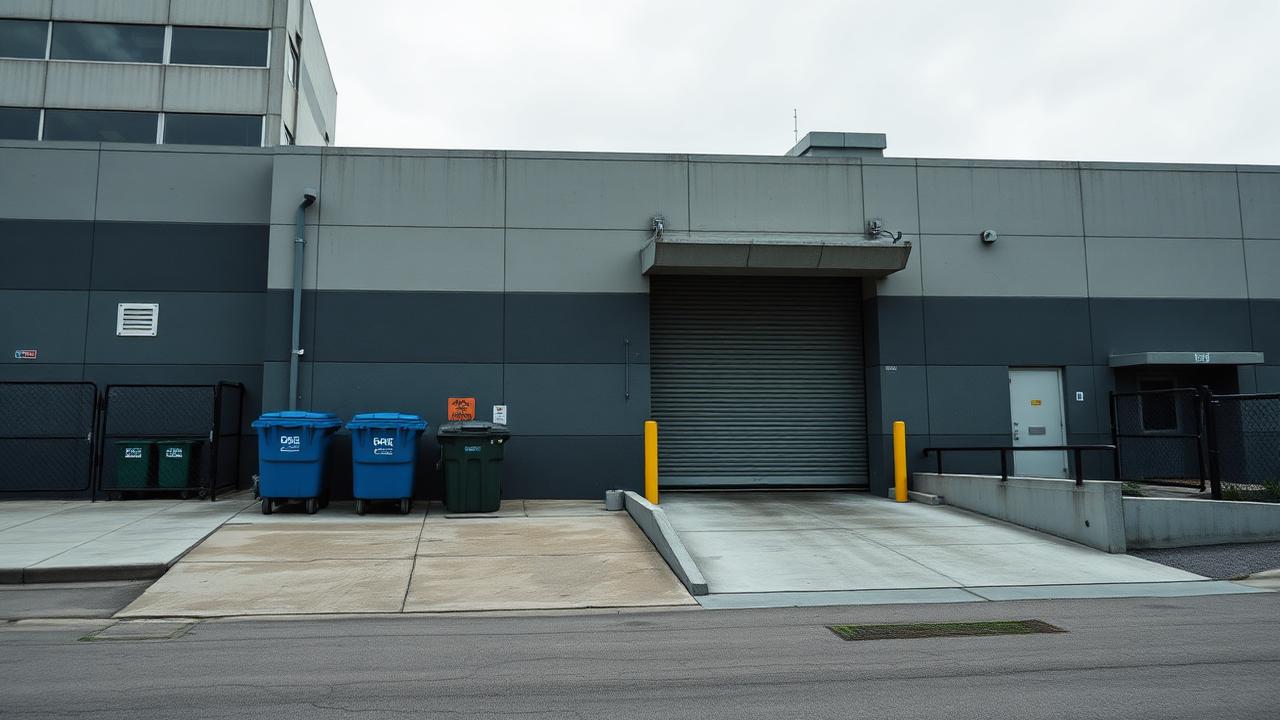
Loading docks often receive daily deliveries and waste collection, making them a common source of unpleasant smells.
Odor Control · June 15, 2026 · 3 min read
Loading Dock Odors: The Problem Residents Never Forget
Loading docks handle deliveries and waste collection every day. Here's why they're a common odor source — and how to keep them under control.
By Luften Team
All posts
Field Tips
Related tips you can put to work today
Dumpster & Loading Dock Odor
The loading dock is often the first impression of the back of house — and the last thing that should smell.
- 1Fog the dumpster interior weekly with a residual encapsulation product.
- 2Rinse the pad with an enzyme surface cleaner, not just a hose.
- 3Store dumpsters on a graded, sealed pad that drains away from the building.
- 4Never park dumpsters within 25 ft of an HVAC outdoor-air intake.
- 5Rotate dumpsters with the hauler — the same unit sitting for months develops permanent odor.
- 6Add a bio-mat under the compactor to absorb leachate.
- 7Install shade — direct sun on a dumpster doubles odor generation.
- 8Wash the wheels — residue on wheels tracks odor into the corridor when moved.
High-Rise Building Odors
High-rises stack odor problems literally — a lobby smells like the basement, and the penthouse smells like the chute.
- 1The stack effect drives odor upward in winter and downward in summer — plan HVAC dispensing to counter.
- 2Seal every chase penetration; unsealed penetrations are highways for kitchen and bathroom odors.
- 3Balance HVAC yearly — an unbalanced system creates pressure differentials that pull odor between units.
- 4Address the chute, waste room, and ejector pit as a single program, not three vendors.
- 5Add corridor air-freshening tuned to the building's signature scent, not off-the-shelf fragrance.
- 6Investigate 'ghost odors' with a smoke pencil; they usually trace to a specific chase or shaft.
- 7In mixed-use towers, isolate restaurant exhaust — commercial kitchen odor migrates through shared HVAC.
- 8Cap unused floor drains with trap seal devices; abandoned units are silent odor sources.
Browse the full library at Luften's 400+ odor control tip guides.
#loading dock odor#service entrance smell#building odor control
Related articles
View allOdor Control
Trash Chute Odor Control in NYC: What Property Managers Should Know
Managing NYC buildings comes with unique odor-control challenges. Here's a primer for property managers across the five boroughs.
Odor ControlWhy High-Rise Buildings Choose 24/7 Odor Control Instead of Constant Cleaning
Cleaning and odor control aren't the same thing. Here's how the best-run high-rises separate the two.
Odor ControlSummer Trash Odors: Why Buildings Smell Worse During Hot Weather
Heat, humidity, and organic waste are a bad combination. Here's why summer drives the spike in odor complaints — and what to do about it.
Odor ControlHow Luxury Apartment Buildings Eliminate Trash Compactor Odors
The compactor room is often the strongest odor source in a building. Here's what drives it and how continuous treatment keeps it in check.
Related service: Odor control services