
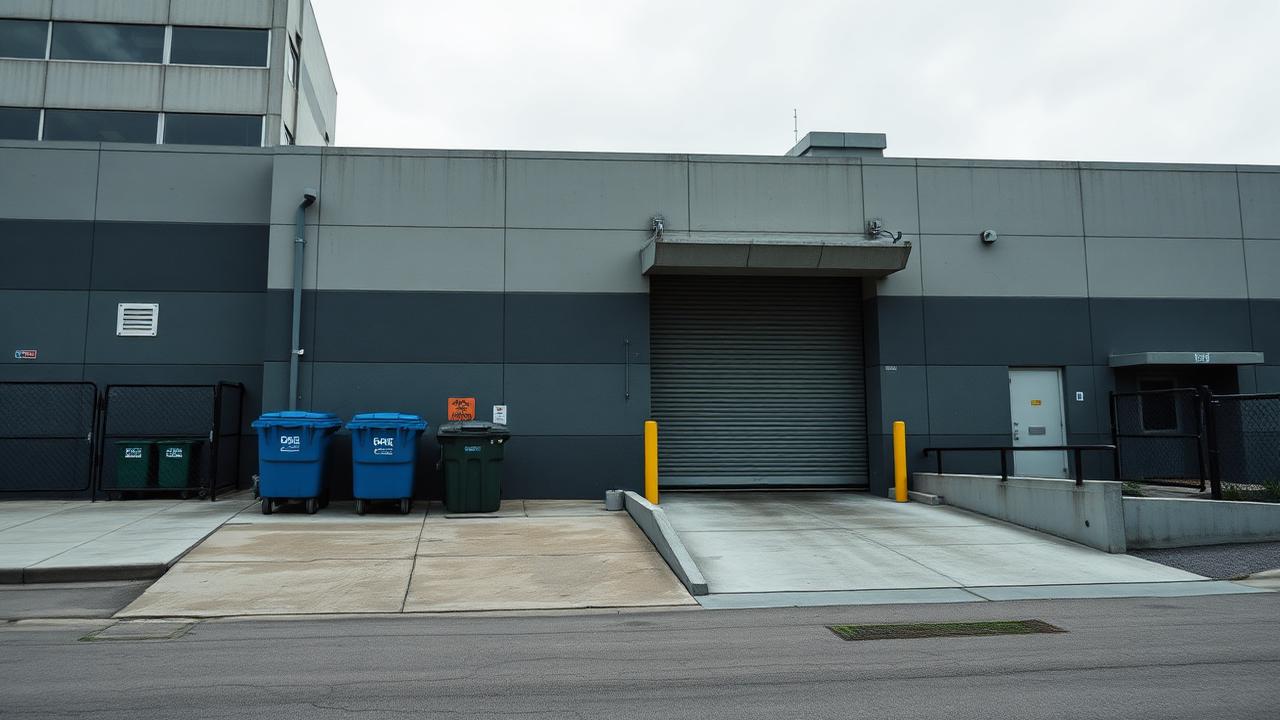
10 field-tested tips
- 1Fog the dumpster interior weekly with a residual encapsulation product.
- 2Rinse the pad with an enzyme surface cleaner, not just a hose.
- 3Store dumpsters on a graded, sealed pad that drains away from the building.
- 4Never park dumpsters within 25 ft of an HVAC outdoor-air intake.
- 5Rotate dumpsters with the hauler — the same unit sitting for months develops permanent odor.
- 6Add a bio-mat under the compactor to absorb leachate.
- 7Install shade — direct sun on a dumpster doubles odor generation.
- 8Wash the wheels — residue on wheels tracks odor into the corridor when moved.
- 9Coordinate pickup cadence with occupancy; summer festivals and holidays need double frequency.
- 10Post 'no liquids' signs — the majority of dumpster odor comes from mop water and food liquids.
Why it matters
Dock odor can reach occupied space through open bays, damaged door seals, and airflow toward service corridors. A complaint upstairs may begin at the waste area rather than on that floor. Check where the smell is strongest during waste handling and whether it persists after the container leaves.
Practical steps
Inspect dumpster lids, hinges, drain plugs, and seams for leaks or trapped debris. Check door bottoms and jambs for gaps, and keep personnel doors from being propped open. Look behind bumpers and beneath dock plates for spilled waste without entering pinch points or reaching under unsecured equipment. Clear drain grates and verify that nearby floor drains hold water in their traps. Contain wash water rather than allowing it to reach storm drains. Record whether complaints coincide with open doors, waste transfers, or exhaust fan operation.
When to call a professional
Call a professional when odor remains after waste removal and cleaning, liquid repeatedly collects beneath equipment, or smells migrate into tenant areas despite closed doors. Building engineering should investigate pressure relationships and exhaust operation. A suspected sewer-gas source needs prompt investigation rather than additional deodorizer.
How Luften handles it
Luften offers a free on-site walkthrough to identify odor sources and provide a written treatment recommendation. Loading-dock recommendations can include bay-door brush seals, a personnel-door air curtain, and perimeter encapsulant misting during waste handling. Managed service programs include documented visits.
Odor control servicesWant Luften to run this program for you?
Patented chemistry, managed dispensing, and one vendor for chute, waste room, pit, lift station, elevator pit, restroom, and signature scent.