
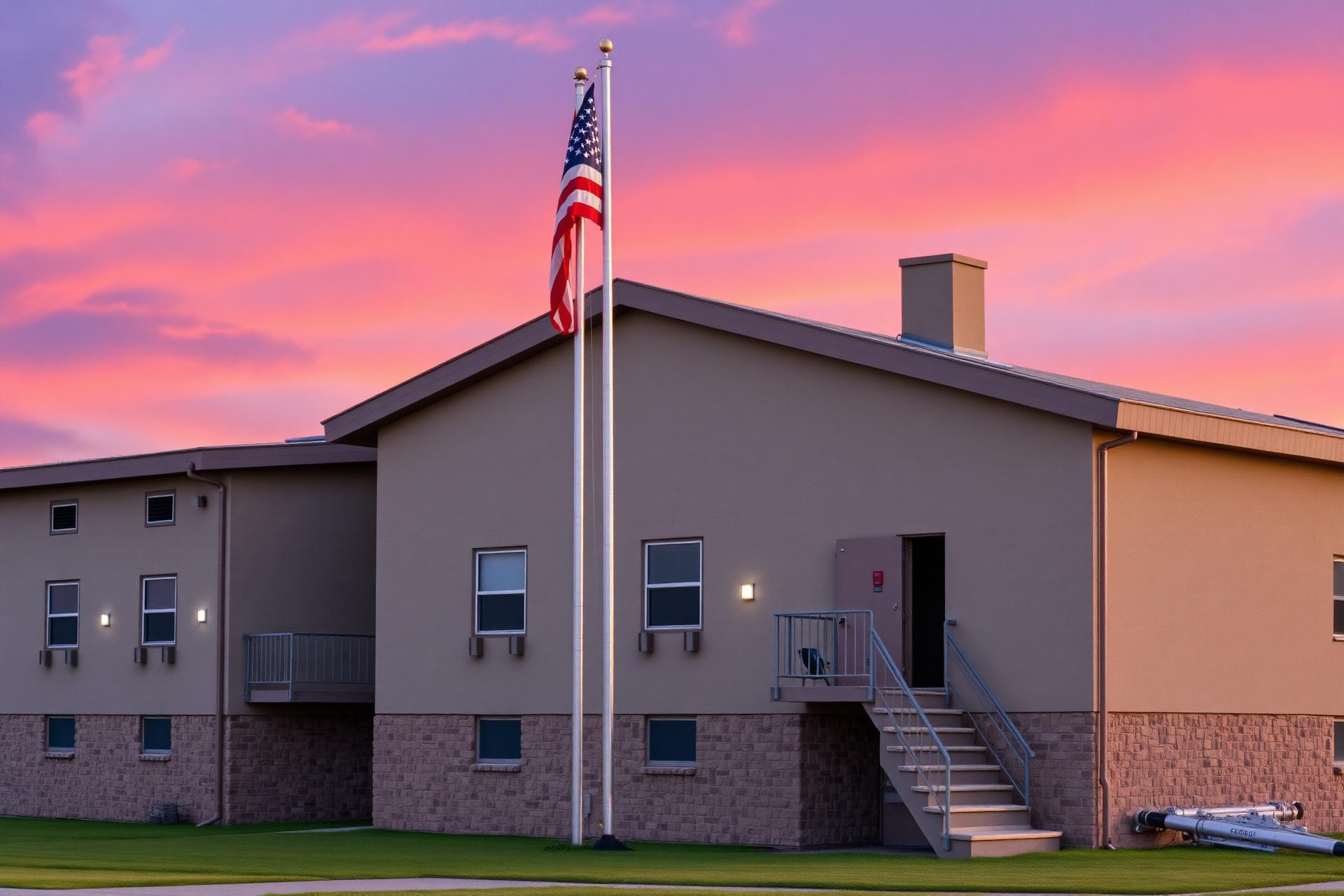
Military
Mission-ready hygiene and air programs for barracks, mess halls, motor pools, and administrative facilities.
Engineered programs for military.
Luften designs preventative and reactive programs tailored to your facility — automated dispensing, high-performance chemistry, and full-service support, without adding labor to your team.
Military facilities combine several of the hardest odor environments in one footprint: barracks operating 24 hours with shared latrines, dining facilities at institutional volume, motor pools and maintenance shops with fuel and solvent residue on the floor, and older infrastructure where basement lift stations and grease interceptors have been in service for decades. Add a documentation requirement and a shift schedule that never fully stops, and reactive cleaning simply cannot keep pace.
Barracks and latrines
Latrine odor is a drain and trap problem before it is a cleaning problem: biofilm in shower and floor drain throats, urinal traps, and dried traps in areas that go unoccupied during deployment or field rotation. We dose those drains on a metered monthly cycle and prime traps in low-use wings. Corridors and common areas get wall-mounted nebulizers where the complaint is carried odor rather than a local source. Rooms and gear cages holding wet field equipment need surface neutralization, not fragrance — the odor is absorbed into fabric and webbing.
Dining facilities, shops, and below-grade wastewater
DFAC kitchens follow the same FOG discipline as any high-volume commercial kitchen: measure the interceptor, dose enzymatically between pump-outs, and treat the dish-pit trench drains where peak-hour smell and drain flies originate. Motor pools and maintenance bays need floor-drain and trench treatment plus surface work on concrete that has absorbed fuel, oil, and coolant. Older installations frequently have basement ejector pits or wet wells generating hydrogen sulfide — the rotten-egg smell that also corrodes concrete, pump seals, and float switches, and that becomes a confined-space hazard rather than a nuisance at higher concentrations.
Safety and documentation constraints
H₂S is the constraint that changes the work. OSHA treats hydrogen sulfide as a serious inhalation hazard with published exposure limits, and the gas deadens the sense of smell at elevated concentrations, so "it doesn't smell as bad today" is not evidence of improvement. Any pit or wet well is treated as a confined space: monitored entry, no unprotected hatch opening, and continuous treatment specifically so nobody has to go in for routine odor control. On the paperwork side, we keep current Safety Data Sheets on file, log every visit per building, and can provide the documentation package an environmental or safety office needs for its own records.
What a routed program looks like on an installation
One technician covers the buildings in scope monthly: refill and recalibrate every unit, dose latrine, kitchen, and shop drains, measure the grease interceptor, verify continuous dosing on the ejector pit or wet well, prime traps in unoccupied wings, and leave a written log per building. Because it is a flat monthly service fee rather than a product purchase, the requirement is predictable and the deliverable is a documented visit, not a case of chemical left in a supply room.
Where odor actually originates.
We map every facility zone to the engineering and chemistry that solves it — no generic playbook.
Barracks latrines & showers
Metered biological dosing of shower, floor, and urinal drains, plus trap priming in wings that go unoccupied.
Dining facility & dish pits
Grease interceptor measurement and enzymatic dosing, with foaming treatment of trench drains.
Motor pools & maintenance bays
Floor and trench drain treatment plus surface neutralization for concrete holding fuel, oil, and coolant residue.
Ejector pits, wet wells & lift stations
Continuous H₂S and FOG treatment so routine odor control never requires a confined-space entry.
The equipment behind the program.
Ejector Pit & Lift Station Treatment
Continuous metered dosing that suppresses hydrogen sulfide generation and breaks down FOG in below-grade wastewater.
Drain & Interceptor Program
Monthly biological dosing for latrine, kitchen, and shop drains with interceptor cap measurement and written logs.
LUFTEN Wall Nebulizer
Corridors, common areas, and gear rooms, with enclosed metered delivery and SDS documentation on file.
Programs matched to military.
The service lines most requested by this industry — click through for scope, chemistry, and pricing.
Get a quote for your upcoming project
A Luften engineer will scope, price, and schedule a walk-through within 48 hours.
From the blog
Have a technician walk your building
We map the garbage room, chute, compactor, drains and lobby, then quote one monthly program. Free walkthrough, free installation, no contract.
Book a free walkthrough
Tell us where the smell is. A Luften technician will walk the building — free assessment, no contract required.