
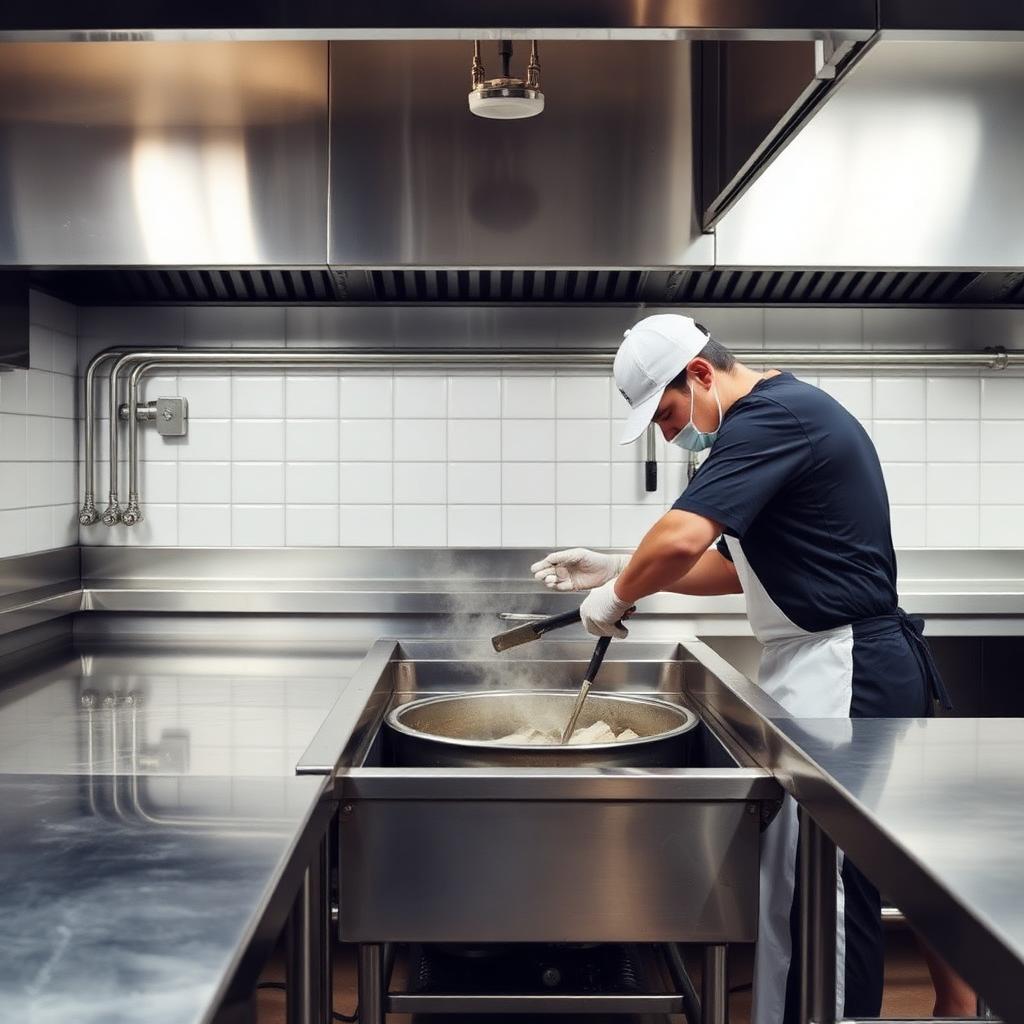
A Saturday night rush is in full swing, and every table in the dining room is occupied. Near the kitchen entrance, a faint but unmistakable scent of rotten eggs and rancid oil begins to drift toward your guests. The interceptor was pumped just three weeks ago, yet the staff is already complaining about the slow-draining three-compartment sink and the thickening layer of sludge in the trap. You are left wondering if the tank is full, if the seals are failing, or if the kitchen staff is simply pouring too much fat down the line.
Do you need to schedule an emergency pump-out, or is the biological balance of the tank off? Is the smell coming from the interceptor itself or the secondary lines feeding it? How can you extend the time between professional cleanings without risking a backup or a health department citation?
At Luften, we engineer specialized programs for commercial kitchens and food-service facilities. It can be tricky to manage fats, oils, and grease (FOG) in a high-volume environment, but there is a right answer for your situation.
This guide examines the mechanical and biological processes that occur within a grease interceptor between professional pump-outs. You will learn the difference between masking odors and digesting solids, why traditional chemical cleaners often fail, and how to implement a consistent maintenance schedule that preserves your plumbing infrastructure while reducing the frequency of expensive vacuum truck visits.
The Chemistry of Grease Trap Decay
A grease trap is not a static holding tank; it is a live biological environment where bacteria break down organic matter. When the system is functioning correctly, the Fats, Oils, and Grease (FOG) float to the top, solids sink to the bottom, and clear water passes through the middle. However, as the grease cap thickens, oxygen levels in the water drop, leading to anaerobic conditions. In this oxygen-deprived state, bacteria produce hydrogen sulfide gas and organic acids, which create the characteristic sulfurous odor often associated with [drain odor elimination](https://luften.com/drain-odor-elimination) issues in commercial kitchens. The primary cause of recurring odors between cleanings is usually the buildup of volatile organic compounds produced by anaerobic bacteria in the sludge layer.
Bio-Enzymatic Dosing vs Chemical Emulsifiers
When a kitchen manager smells a trap, the instinct is often to pour caustic chemicals or heavy degreasers down the sink. This is a mistake. Chemical emulsifiers simply break the grease into smaller droplets, allowing it to pass further into the municipal sewer line where it eventually re-solidifies, potentially leading to heavy fines. A more sustainable approach involves bio-enzymatic dosing, which introduces specific strains of bacteria designed to consume the FOG and convert it into water and carbon dioxide. Automated bio-enzymatic dosing is the most effective way to reduce the FOG layer and prevent the formation of hydrogen sulfide gas without damaging your pipes. This proactive approach ensures that your [grease trap maintenance](https://luften.com/grease-trap-maintenance) program focuses on volume reduction rather than just temporary masking.
Identifying Secondary Odor Sources
Sometimes the foul smell in a kitchen isn't coming from the interceptor itself, but from the network of pipes leading to it. Biofilm—a thick, slimy layer of bacteria and food particles—builds up on the walls of the drain lines. Even if your trap is pumped regularly, this biofilm continues to off-gas. In many facilities, this issue is exacerbated by floor drains that have dried out, allowing sewer gas to bypass the P-trap. If the odor persists immediately after a pump-out, the problem is likely localized biofilm in the branch lines or a dry floor drain trap rather than the main interceptor. For facilities in [our New York service area](https://luften.com/locations/new-york), we often find that high-rise kitchen stacks require specific attention to these vertical lines to prevent odor migration between floors.
Extending the Pump-Out Cycle
The goal of a comprehensive FOG program is to extend the time between pump-outs by maintaining the maximum capacity of the tank. When FOG levels reach 25% of the tank's total volume, the trap loses its ability to effectively separate solids, and the risk of a backup increases significantly. By utilizing a continuous dosing system, you can keep the grease cap thin and the bottom sludge layer manageable. This does not eliminate the need for a professional vacuum service, but it ensures that the trap remains functional for a longer duration. Properly maintained grease traps can often go 30% to 50% longer between pump-outs compared to traps that receive no intermediary treatment. This also reduces the load on other critical infrastructure, such as [lift station & ejector pit care](https://luften.com/lift-station-care), which can be compromised by excess grease bypass.
Choosing the Right Program for Your Property
Selecting a maintenance strategy depends on your kitchen's volume, the type of food prepared, and the local environmental regulations. A facility frying large quantities of poultry will face different challenges than a bakery. The first step is always to assess the current condition of the interceptor and the integrity of the seals on the access covers. A cracked seal can allow odors to escape even if the chemistry inside the tank is perfectly balanced.
Once the mechanical components are verified, the focus shifts to biological management. Integrating an automated dispensing system ensures that treatment happens during low-flow periods, typically at night, allowing the bacteria sufficient contact time to digest the grease. This consistency is what prevents the spikes in odor and the sudden backups that disrupt service during peak hours.
If you are managing a larger facility with diverse needs, you may also need to consider how your kitchen drainage interacts with other systems, such as [restroom odor control](https://luften.com/odor/restroom) protocols. A holistic approach ensures that no single area of the building becomes a source of guest complaints.
Have a question or need support? [Talk to our team](https://luften.com/contact) today—we'll connect you with the right expert to evaluate your drainage and odor control needs.