
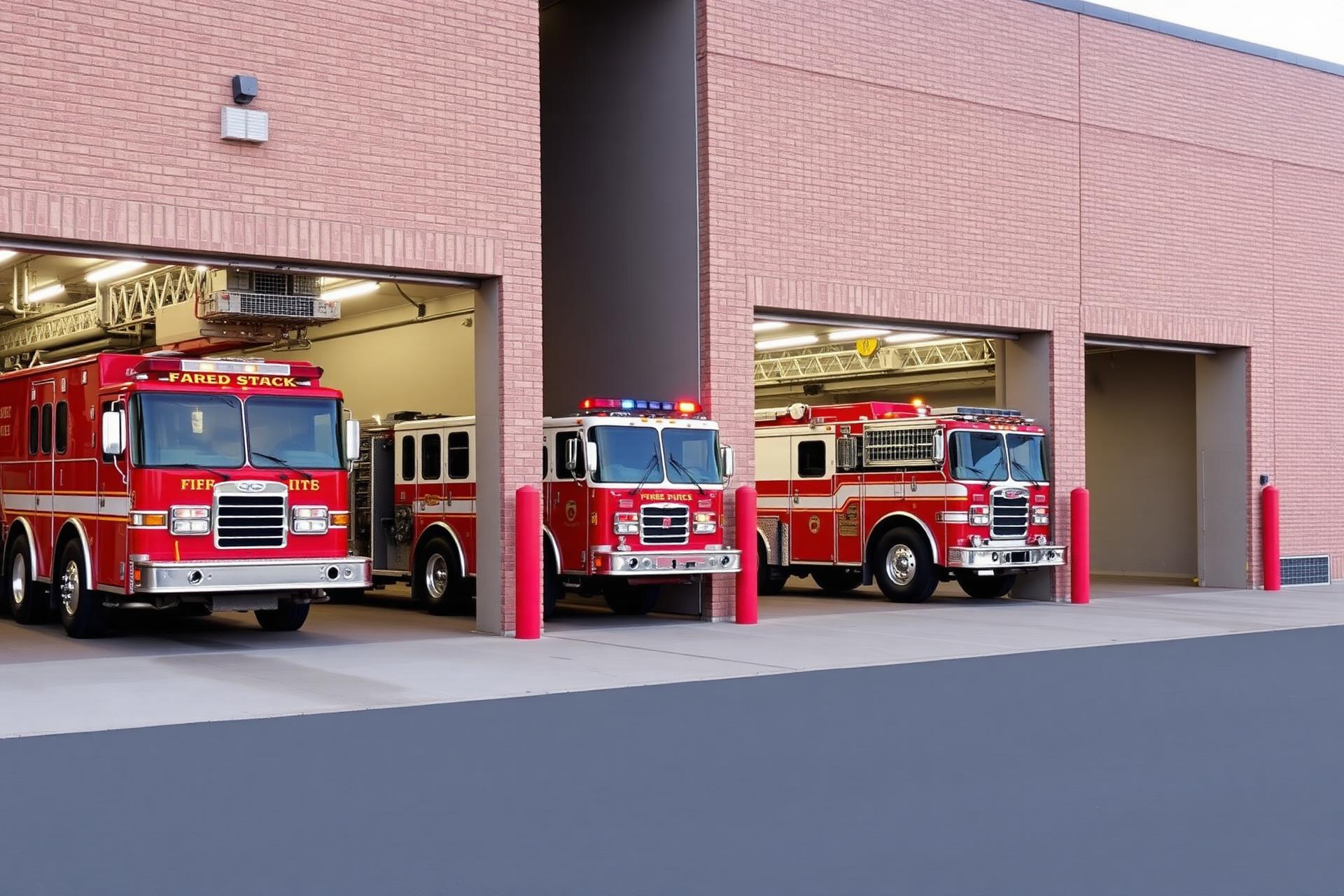
Police & Fire
Stations stay shift-ready with locker room, kitchen, apparatus bay, and holding-area hygiene programs built for 24/7 use.
Engineered programs for police & fire.
Luften designs preventative and reactive programs tailored to your facility — automated dispensing, high-performance chemistry, and full-service support, without adding labor to your team.
A station is a workplace, a dormitory, a kitchen, a garage, and in many police facilities a holding area — occupied continuously by rotating crews, with no overnight window when the building sits empty and can be reset. Odor accumulates in exactly the places that are hardest to clean around a shift schedule, and personnel who spend 24 hours in the building notice it long before a visitor does.
Turnout gear, locker rooms, and dorms
In fire stations the dominant source is absorbed combustion residue: turnout gear, hoods, and boots hold smoke compounds that keep off-gassing in a locker or gear room, and that odor is not a comfort issue alone — it is why gear storage is kept separate from living space in modern station design. We treat gear rooms and locker areas with odor-binding surface chemistry and metered units rather than fragrance, because perfuming smoke residue does nothing to the compound. Shower and floor drains in the locker block get monthly biological dosing; bunk-room corridors get low-intensity ambient treatment where the complaint is carried odor.
Apparatus bays, kitchens, and holding areas
Apparatus bays combine diesel exhaust residue with floor and trench drains that receive wash-down water carrying fuel, oil, and fireground runoff — the drains themselves become the odor source once biofilm establishes. Station kitchens run like small restaurants and need grease trap dosing and dish-drain treatment, especially in houses that cook every shift. Holding cells and processing areas in police facilities deal with urine, vomit, and body odor absorbed into concrete, painted block, and floor joints; those require surface neutralization that binds ammonia, plus drain dosing, and chemistry that will not create a respiratory complaint from someone confined in the space.
Safety, exposure, and documentation constraints
Two constraints shape product selection. First, personnel already carry an occupational exposure load, so we avoid solvent-heavy or heavily fragranced products in living and sleeping areas and use low-VOC, fragrance-free options where possible, with Safety Data Sheets on site. Second, anything in a holding area has to be tamper-resistant and out of reach, delivered by an enclosed metered unit rather than a bottle. Where a station has a basement ejector pit — common in older houses — hydrogen sulfide is treated as a confined-space hazard and handled with continuous dosing so nobody opens a hatch for routine odor control.
What monthly service looks like at a station
One visit covers the whole house: refill and recalibrate the gear-room, locker, and holding-area units, dose the shower, floor, trench, and kitchen drains, measure and treat the grease trap, verify continuous treatment on any pit, and spot-treat surfaces after a significant incident. Service is scheduled around shift change so it does not interrupt response readiness, and the log stays with the captain or facilities lead. The result crews actually report is that the bunk room and kitchen stop smelling like the gear room.
Where odor actually originates.
We map every facility zone to the engineering and chemistry that solves it — no generic playbook.
Turnout gear & locker rooms
Odor-binding treatment for absorbed smoke compounds in gear, hoods, and boots, plus drain dosing in the shower block.
Apparatus bays & trench drains
Floor and trench drain treatment for wash-down residue, and surface work on concrete holding diesel, oil, and fireground runoff.
Station kitchen
Grease trap dosing and dish-drain treatment for houses cooking every shift.
Holding cells & processing areas
Tamper-resistant metered units and ammonia-binding surface neutralization, with low-VOC chemistry for confined occupants.
The equipment behind the program.
Gear Room & Locker Treatment
Metered, fragrance-free neutralization that binds absorbed smoke compounds instead of covering them.
Drain & Grease Trap Program
Monthly biological dosing for shower, trench, bay, and kitchen drains, with grease trap measurement and written logs.
Secure Metered Dispensing
Tamper-resistant enclosed units for holding and processing areas, mounted out of reach with SDS on site.
Programs matched to police & fire.
The service lines most requested by this industry — click through for scope, chemistry, and pricing.
Get a quote for your upcoming project
A Luften engineer will scope, price, and schedule a walk-through within 48 hours.
From the blog
Have a technician walk your building
We map the garbage room, chute, compactor, drains and lobby, then quote one monthly program. Free walkthrough, free installation, no contract.
Book a free walkthrough
Tell us where the smell is. A Luften technician will walk the building — free assessment, no contract required.