
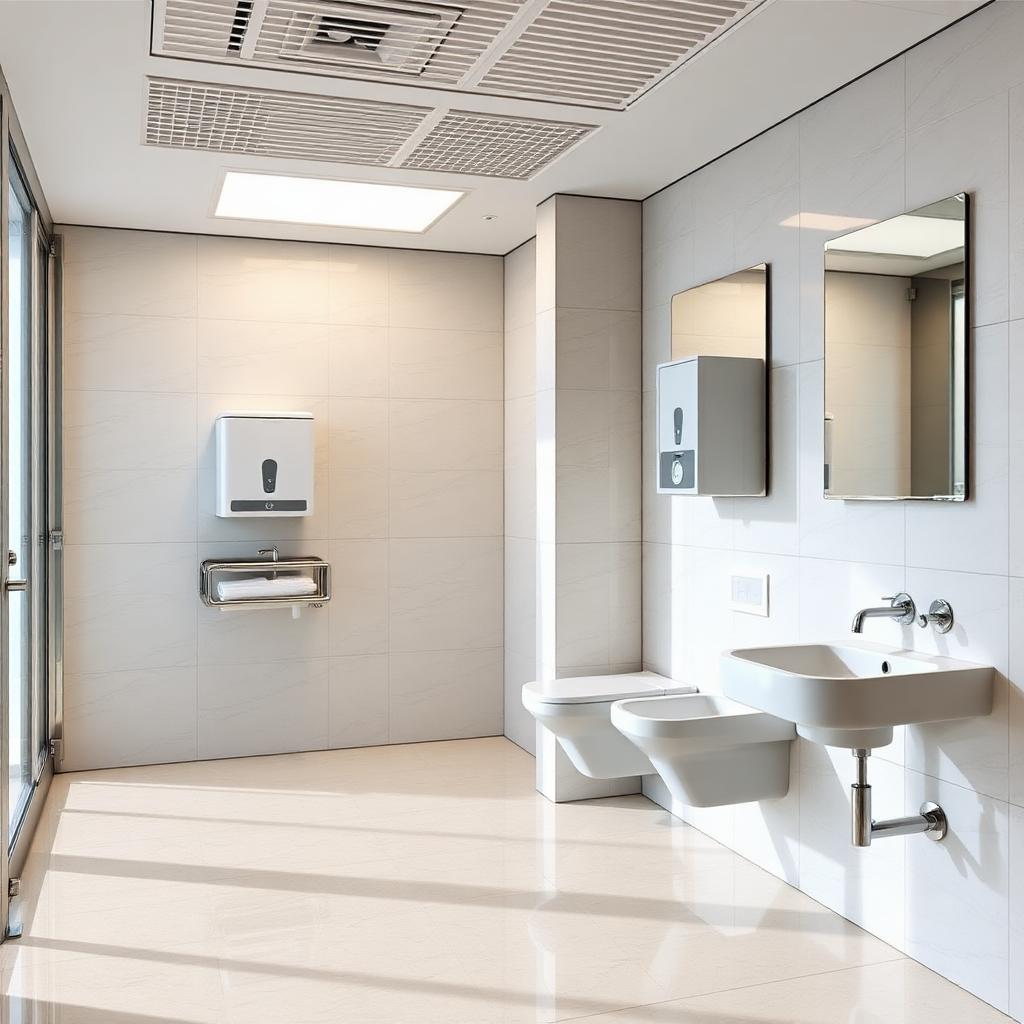
You walk into the lobby of a midtown high-rise at 3:00 PM, and the first thing you notice is not the architecture or the concierge, but the distinct, sharp scent of ammonia drifting from the nearby public restroom. Despite the presence of automated air fresheners pulsing every fifteen minutes, the underlying smell of stale urine and damp concrete persists. The janitorial staff has mopped twice today, yet the odor seems baked into the floor tiles and trapped within the floor drains. It is a frustrating reality for facility managers: a restroom can look pristine but still signal to every visitor that it is not truly clean.
Are you fighting a losing battle by trying to mask smells that originate within the plumbing? Do you know the difference between a surface bacteria problem and a deep-seated drain trap issue? Is your current chemical program actually breaking down organic matter or just layering fragrance on top of it? At Luften, we provide engineered solutions for odor control programs across the New York tri-state area. It can be tricky to identify the exact origin of a persistent smell, but there is a right answer for your situation based on chemistry and airflow.
This guide explores the specific biological and chemical causes of commercial restroom odors, focusing on the differences between uric acid buildup, drain trap evaporation, and biofilm accumulation. By the end of this article, you will understand how to transition from a reactive masking strategy to a proactive source-treatment program that ensures long-term air quality and resident satisfaction.
Uric Acid Saturation vs. Surface Bacteria
Most restroom odors are attributed to general cleanliness, but the primary culprit in high-traffic facilities is often uric acid crystals. When urine leaves the body, it is relatively odorless, but as it reacts with the oxygen in the air and the bacteria on the floor, it breaks down into ammonia. In a busy commercial setting, urine splashes onto porous grout lines and behind fixtures where standard mopping cannot reach. Over time, these salts crystallize and become permanent fixtures in your flooring. Traditional disinfectants often fail to penetrate these crystals, meaning the odor-causing source remains active even after the floor appears dry and clean. To truly solve this, a facility must utilize bio-enzymatic cleaners that specifically target and digest these protein-based crystals rather than just killing surface-level bacteria.
Dry P-Traps vs. Biofilm Accumulation
If the odor in your facility smells more like rotten eggs or sewer gas than ammonia, the issue is likely rooted in the drainage system rather than the floor. Every floor drain features a P-trap designed to hold a small amount of water, which acts as a physical barrier against sewer gases. In restrooms where certain stalls or floor drains are rarely used, this water evaporates, allowing hydrogen sulfide to enter the room. Conversely, drains that are used frequently often suffer from biofilm—a thick, slimy layer of bacteria and organic waste that clings to the pipe walls. Effective [drain odor elimination](/drain-odor-elimination) requires a dual approach of ensuring trap seals are maintained while using non-corrosive biological blockers to strip away the interior biofilm. This prevents the gas from ever reaching the breathing zone of your tenants or guests.
Atmospheric Masking vs. Molecular Encapsulation
Many facility managers rely on heavy fragrances to hide odors, but this often results in a "cloying" atmosphere where the fragrance and the malodor compete. Masking simply attempts to overwhelm the olfactory senses with a stronger scent. Engineering-grade solutions, however, utilize molecular encapsulation. This process involves a chemical reaction where the odor molecules are trapped and neutralized at a molecular level, effectively removing them from the air rather than covering them up. While scent marketing is an excellent tool for luxury environments, it should only be deployed once the underlying malodors have been chemically neutralized. True air quality is achieved when you eliminate the malodor molecule first, allowing any secondary ambient scenting to perform its intended aesthetic function without interference.
Continuous Dosing vs. Manual Application
Manual cleaning is essential for aesthetics, but it is rarely enough to manage the chemical load of a high-volume restroom. Uric acid and drain bacteria accumulate 24 hours a day, while a cleaning crew may only visit once or twice. This is why many facilities in our New York service area are moving toward automated, continuous dosing systems. These systems deliver precise amounts of enzymatic treatments into drains and onto surfaces at timed intervals, ensuring the biological load never reaches a threshold where it becomes noticeable. The shift from manual cleaning to automated dosing reduces labor costs and ensures that odor control is maintained even during peak usage hours when staff cannot access the restrooms.
Choosing the Right Program for Your Property
Identifying the right solution begins with an audit of your facility's specific pain points. If your complaints are localized to the floor and baseboards, your focus should be on uric acid digestion and grout sealing. If the odors are intermittent and coincide with changes in barometric pressure or HVAC cycles, the problem likely lies within your P-traps and venting system. Managers must also consider the layout of the building; a restroom located near a kitchen may also be affected by issues requiring grease trap maintenance, which can back up and cause odors to migrate through common plumbing lines.
For facilities in our New Jersey service area and NYC, the goal is to create a seamless experience for every occupant. A successful program integrates high-performance chemistry with consistent delivery methods, ensuring that the restroom environment reflects the overall quality of the building management. By moving away from aerosol sprays and toward source-specific treatments, you protect your infrastructure and your reputation simultaneously.
Have a question or need support? Talk to our team — we'll connect you with the right expert.