
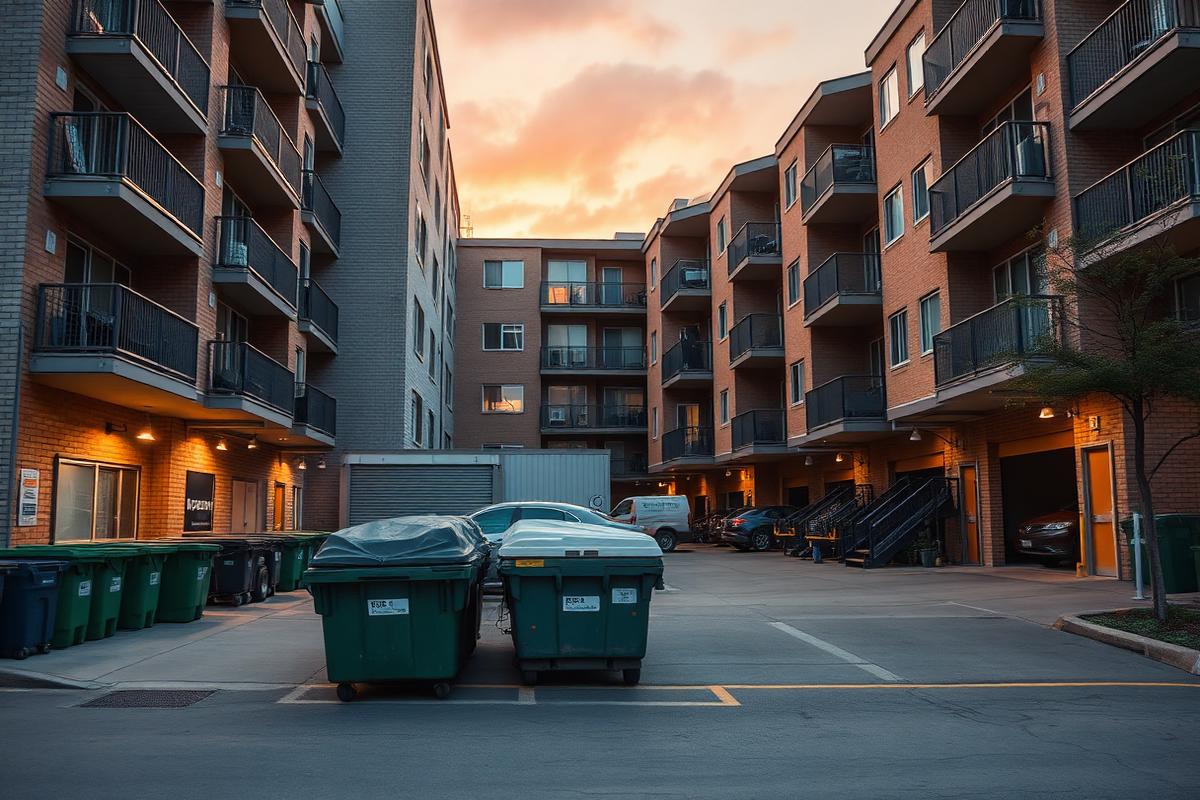
Picture this: it is a humid Tuesday in mid-August, the thermometer on the street reads 94 degrees, and the air in your building's service hallway is thick and stationary. As you step onto the fourth floor, the distinct, sour smell of decomposing organic matter hits you through the chute intake door before you even touch the handle. A resident on 4B has already sent an email to the board complaining that the smell is seeping into their foyer, and the porter reports that the compactor room is currently unbearable despite being hosed down this morning. The heat has turned the trash chute into a massive, vertical chimney of off-gassing waste that is now distributing throughout the building.
Do you need to increase the frequency of your wash-downs or change the chemistry of your cleaning agents? Is the odor coming from the chute walls or is it a symptom of poor airflow in the compactor room? Are you effectively neutralizing the molecules or simply trying to overpower them with a fragrance? Understanding the intersection of thermodynamics and microbiology is the only way to resolve these issues during a New York summer.
At Luften, we design and implement engineered odor-control and wastewater programs for high-density urban environments. It can be tricky to manage vertical transit systems like chutes during extreme heat, but there is a right answer for your specific building layout.
This guide examines the mechanics of the 'stack effect' in NYC high-rises, the role of bacteria in heat-accelerated decomposition, and the specific chemical strategies required to neutralize odors at the source. By the end of this article, you will be able to distinguish between temporary masking and permanent remediation, allowing you to maintain a neutral environment for your residents even during record-breaking heat waves.
The Stack Effect and Chute Thermodynamics
In a typical NYC high-rise, the trash chute acts as a natural flue. During the summer, the air inside the building is generally cooler than the air at the top of the chute or outside, which can create a downward draft. However, if the compactor room is not properly pressurized or if the rooftop vent is obstructed, odors can be pushed out of the intake doors every time a resident opens them. When outdoor temperatures rise, the rate of decomposition for organic matter increases exponentially, leading to a higher concentration of volatile organic compounds (VOCs) and hydrogen sulfide gas. Effective management requires ensuring that the chute vent is clear and that the compactor room maintains a slight negative pressure to prevent odors from migrating into the residential hallways.
Source Treatment vs Masking Agents
Many facilities attempt to solve summer odor issues by using heavy fragrances that sit on top of the foul air. This rarely works because the human nose can still detect the underlying malodor, resulting in a cloying mix of perfume and decay. To truly eliminate the problem, you must address the biofilm—the sticky layer of proteins and fats that coats the inside of the chute. Using targeted trash chute cleaning protocols that utilize enzymatic cleaners will break down this organic buildup rather than just wetting it. The goal of a professional program is to reach the 'source' of the odor by dissolving the biological film that allows bacteria to thrive in the first place.
Automated Dosing and Vapor Systems
During a heat wave, manual cleaning once a week is insufficient because the bacterial load resets within hours of a wash. This is where automated systems become necessary. These systems can be installed to deliver metered doses of odor-neutralizing chemistry directly into the chute or compactor area at regular intervals. These neutralizers work through a process called encapsulation, where the chemical bonds with the odor molecule to render it inert. In our New York service area, we often see that buildings with high-volume residential turnover benefit most from continuous vapor systems that treat the air in the compactor room 24/7. Automated dosing ensures that your odor defense remains active overnight and during weekends when staffing levels are lower and trash volume is often higher.
Drains and Secondary Odor Sources
Sometimes, what a manager perceives as a chute odor is actually coming from the floor drains in the compactor room or the basement. When organic slurry from trash bags leaks onto the floor, it finds its way into the drains where it sits and rots. If your drain odor elimination strategy is neglected, the heat will pull those sewer gases up through the same vertical pathways as the trash chute. You must treat the compactor room floor drains as an extension of the chute itself, using bio-remediation to keep the traps clear of fermenting waste.
Choosing the Right Odor Program for Your Property
Selecting the right approach depends on the age of your building, the condition of your compactor, and the specific complaints you are receiving. A pre-war building with original chutes will have different porous surfaces than a modern glass tower, requiring different chemical concentrations. If you are also managing high-traffic common areas, you might consider how scent marketing can be used in the lobby to create a positive first impression, but this should only be done once the back-of-house odors are fully controlled.
Your strategy should move from the basement up. Start by ensuring your compactor is functioning and that the surrounding area is treated with an antimicrobial wash. Then, address the vertical chute walls with a professional cleaning to remove the winter’s accumulation of grease and grime. Finally, implement a vapor or misting system to handle the daily influx of new waste during the peak summer months. A multi-layered approach that combines physical cleaning, chemical neutralization, and mechanical airflow management is the only way to ensure a summer without resident complaints.
Have a question or need support? Our team is here to help — we'll connect you with the right expert to audit your facility's needs.