
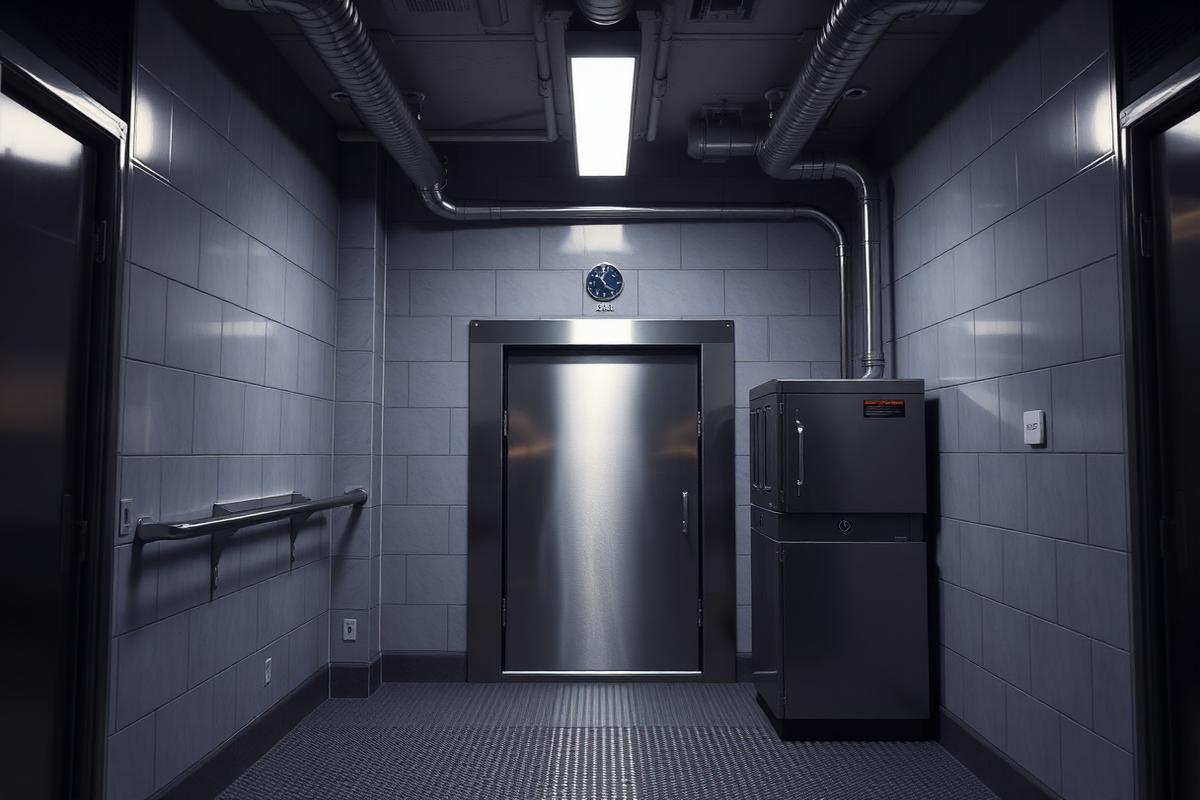
Picture this: it is the Sunday night before midterms in an eighteen-story campus residential tower. Between the discarded takeout containers, damp coffee grounds, and organic waste accumulating in the basement compactor, a thick, sour scent has begun to migrate upward through the chute. By Monday morning, the stack effect has pulled those odors into the hallways of the upper floors, and your facilities portal is already flagging three new work orders from concerned resident assistants. The heat of the building’s internal infrastructure only accelerates the decomposition, turning a routine waste management task into a building-wide air quality crisis.
How do you address the recurring bacterial growth inside the chute walls without disrupting student life? Is the current cleaning schedule sufficient to manage the sheer volume of organic matter generated by a thousand students? Can you effectively neutralize the gases rising from the compactor before they reach the living quarters? These are the logistical hurdles that facilities directors must navigate when managing high-density student housing.
At Luften, we design and implement engineered programs for high-traffic facilities. It can be tricky to balance effective chemical intervention with the safety and comfort requirements of a residential campus, but there is a right answer for your situation.
This guide examines the mechanical and biological causes of trash chute odors in university settings, contrasting the roles of deep cleaning, automated neutralization, and source treatment. By the conclusion, you will understand how to implement a multi-tiered defense that prevents odors from migrating into hallways and ensures your waste management infrastructure remains compliant and sanitary.
Source Treatment vs. Air Neutralization
To manage dormitory odors effectively, you must distinguish between the waste itself and the air that carries the scent. Source treatment involves applying biological or chemical agents directly to the refuse and the surfaces of the compactor to stop the production of hydrogen sulfide and mercaptans. Air neutralization, conversely, utilizes vapor systems to intercept airborne molecules as they travel up the chute. Relying solely on one method often leads to failure in high-rise environments where the chimney effect is strongest. A successful program must treat both the physical waste at the base and the column of air rising through the center of the building.
Biofilm Accumulation and Chemical Cleaning
Over a semester, the interior walls of a trash chute collect a layer of organic film, grease, and moisture. This biofilm serves as a breeding ground for bacteria that produce foul-smelling gases. Standard pressure washing with water may remove loose debris, but it rarely penetrates the stubborn microbial layers. Implementing professional trash chute cleaning using specialized foaming degreasers and enzymatic digesters is necessary to break the molecular bond between the biofilm and the stainless steel or masonry chute. Regularly scheduled deep cleans are the only way to remove the physical substrate that allows odor-causing bacteria to thrive throughout the academic year.
Continuous Dosing vs. Manual Intervention
In a busy dormitory, manual application of deodorizers is often inconsistent and insufficient for the volume of waste produced between pickups. Automated dosing systems provide a more reliable solution by injecting odor-neutralizing compounds directly into the compactor or the top of the chute at set intervals or during trigger events. These systems ensure that even during peak usage times, such as move-in week or finals, the odor load is managed without additional labor. Incorporating odor control programs that utilize automated technology reduces the margin for human error and maintains a baseline of air quality. Automating the delivery of neutralizing agents ensures consistent protection against the fluctuating waste volumes typical of campus life.
Managing the Stack Effect in High-Rise Towers
The physics of a tall building creates a natural upward draft within the trash chute, particularly during the winter months when the building’s internal heat rises. This stack effect carries gases from the compactor room to the highest floors in seconds. To combat this, facilities must look at the airflow of the entire waste room. If the compactor room is not under negative pressure, odors will escape every time a student opens a chute intake door. Within our New York service area, we often see that mechanical ventilation improvements paired with molecular odor counteractants are required to keep these gases contained. Controlling the airflow dynamics of the waste room is just as critical as the chemistry used to treat the trash itself.
Choosing the Right Strategy for Your Facility
Selecting an odor management strategy requires an audit of your building's specific geometry and occupancy levels. A ten-story dorm with internal trash rooms on every floor faces different pressures than a low-rise complex with external collection points. You should prioritize solutions that use non-toxic, biodegradable chemistry to ensure student safety while providing industrial-strength neutralization. Start by assessing the condition of the chute walls and the frequency of your current hauling schedule.
For facilities in our New Jersey service area, the local climate and humidity levels will also dictate how quickly organic matter breaks down. A combined approach of quarterly mechanical cleaning and monthly maintenance of automated vapor systems usually provides the most stable environment for residents. By addressing the biological source and the mechanical airflow, you can eliminate the cycle of student complaints.
Have a question or need support? Our team is here to help — we'll connect you with the right expert.