
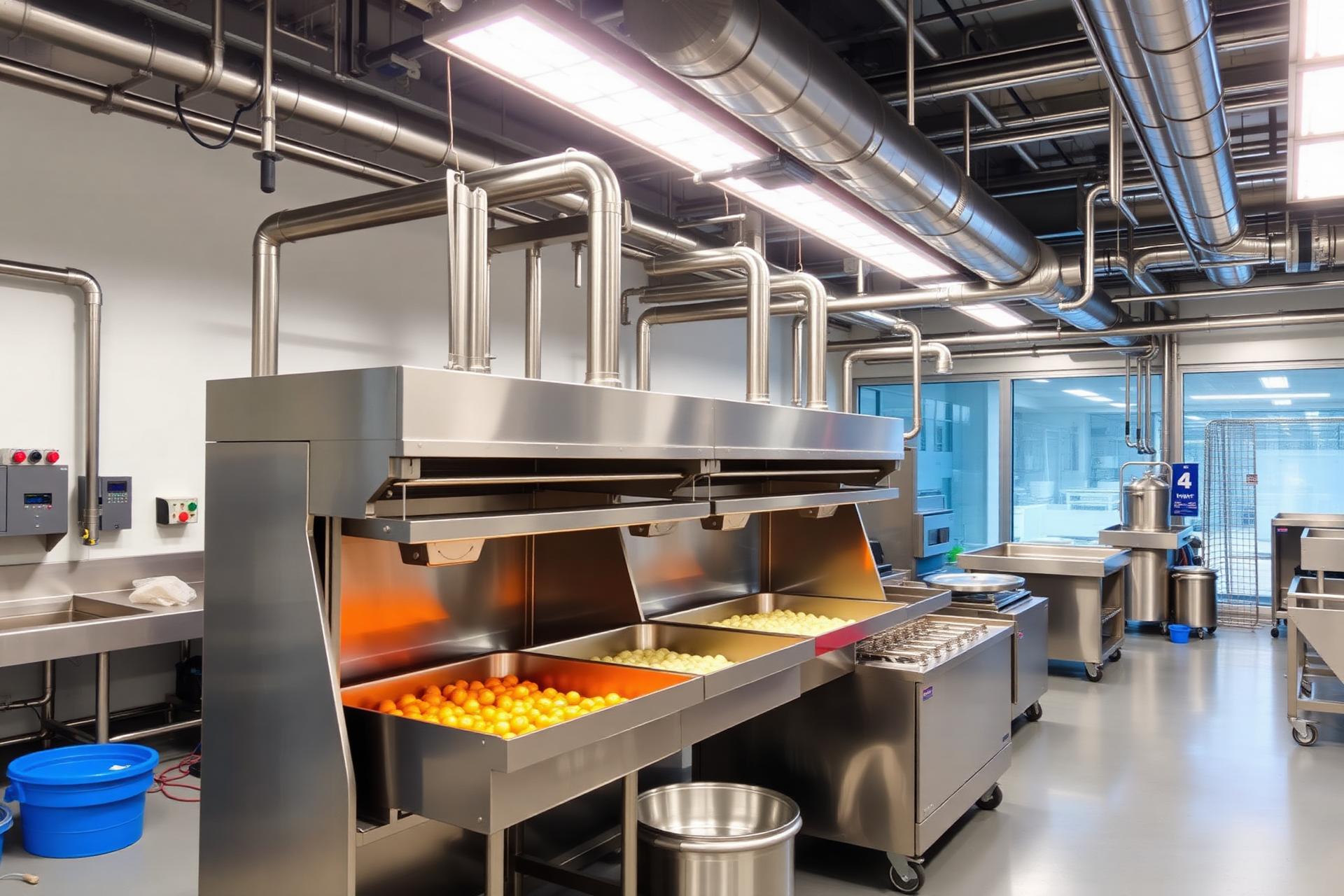
Food Processing
Sanitation-focused programs that meet food safety standards while controlling drain odors, waste streams, and ambient air.
Engineered programs for food processing.
Luften designs preventative and reactive programs tailored to your facility — automated dispensing, high-performance chemistry, and full-service support, without adding labor to your team.
Food and beverage processing plants generate continuous high-strength organic load: protein residues, sugars, fats, and CIP rinses all converge in the floor drains, trench drains, and wastewater pretreatment side. Without engineered biological treatment, that load turns into odor, FOG accumulation, and surcharge fees from the POTW.
Why standard sanitation isn't enough
Caustic and acid CIP cycles sanitize equipment but don't address the bio-load that has migrated into the drain network and pretreatment system. Quaternary disinfectants kill on contact but evaporate, leaving organics behind to feed odor-producing anaerobes overnight.
The LUFTEN approach for food processing
We deploy continuous biological dosing to floor drains, trench drains, and wastewater equalization tanks — bacteria selected to thrive in your specific waste stream. Ambient nebulization handles production-area air and waste-holding zones. Every program documents dose, run-time, and BOD/FOG reduction in a format your QA team can hand to auditors and your municipality.
What changes for the plant
Lower BOD and FOG at the discharge meter, fewer surcharge events, cleaner-smelling production and dock zones, and a compliance binder that's ready before the audit is scheduled.
Controlling steam, exhaust and odor in production areas
Production-area odor needs a different approach from residue inside a drain. Luften uses ambient nebulization with food-safe chemistry for process-generated odors in production and packaging areas. The same approach addresses waste-holding zones, with outdoor-rated nebulization at docks and rendering areas. The program distinguishes the air receiving the odor from the waste stream creating it.
Steam and process exhaust can carry production odors toward adjoining work areas or the dock. Ambient treatment addresses those odors; it is not a replacement for production ventilation or equipment sanitation. The existing food-safe ambient nebulizer program uses chemistry intended for food-contact environments. Treatment selection belongs with the plant’s production-area requirements rather than a general room-fragrance program.
For the facilities and QA teams, the scope should identify whether the concern is production air, waste holding or a connected drain. A dock odor and an indoor trench-drain odor may need separate treatment points even when both begin with the same organic waste stream. Matching the program to those locations makes the service scope easier to review.
Drain, trench and pretreatment programs
Protein residues, sugars, fats and CIP rinses continue into the drain network after equipment has been sanitized. Luften deploys continuous biological dosing to floor drains, trench drains and wastewater equalization tanks. The bacteria are selected for the plant’s waste stream, including protein, dairy, sugar or mixed loads. The purpose is to address organic material between sanitation cycles, not replace those cycles.
The pretreatment program also includes EQ-tank and DAF-side dosing to reduce BOD, FOG and TSS heading toward the receiving treatment system. Floor-drain care and pretreatment support are connected but distinct parts of the scope. Drain treatment addresses local buildup and odor; pretreatment dosing addresses the waste stream before discharge.
Documentation records dose, run-time and surcharge-relevant BOD and FOG trends. QA teams can use that information alongside the plant’s existing sanitation and discharge records when preparing for an audit or a municipal review. The program supports reduction of the load associated with surcharges; it does not promise a particular fee reduction or replace discharge monitoring.
Where odor actually originates.
We map every facility zone to the engineering and chemistry that solves it — no generic playbook.
Floor & trench drains
Continuous biological dosing keeps organic load from building up between CIP cycles.
Wastewater pretreatment
EQ-tank and DAF-side dosing reduces BOD, FOG, and TSS heading to the POTW.
Production & packaging air
Ambient nebulization with food-safe chemistry handles process-generated odors without contaminating product.
Waste holding & rendering
Outdoor-rated nebulization at the dock and rendering area prevents nuisance complaints from neighbors.
The equipment behind the program.
Drain & Pretreatment Program
Biological dosing engineered for protein, dairy, sugar, or mixed waste streams.
Food-Safe Ambient Nebulizer
Production-area nebulization using chemistry registered for food-contact environments.
Compliance & Discharge Reporting
Monthly documentation of dose, run-time, and surcharge-relevant BOD/FOG trends.
Programs matched to food processing.
The service lines most requested by this industry — click through for scope, chemistry, and pricing.
From the LUFTEN journal.
Drain Odor Elimination in Commercial Kitchens and Floor Sinks
Floor drains are the most common source of mystery smells in restaurants and commissary kitchens. Bleach makes it worse. Biological dosing solves it.
Read article Grease & DrainsGrease Trap Maintenance: Cutting Pump-Outs by Two-Thirds with a Real Program
Hospitals, hotels, and high-volume kitchens are stretching service intervals from six weeks to quarterly. Here's the chemistry, the cadence, and the documentation that makes it stick.
Read article Waste WaterHydrogen Sulfide (H₂S) Treatment: Stopping the Rotten-Egg Smell at the Source
H₂S is corrosive, dangerous at concentration, and the source of the rotten-egg smell that haunts mechanical rooms and lift stations. Here's how to treat it instead of vent it.
Read articleFood processing odor control — FAQ
How do you remove odors in food production areas?
Luften uses ambient nebulization for process-generated production and packaging odors, with biological dosing for connected floor drains, trench drains and pretreatment systems. Waste-holding and dock areas receive treatment suited to those locations.
Is the chemistry food-safe?
The page’s production-area program uses food-safe ambient chemistry registered for food-contact environments. Luften matches the biological drain and pretreatment program to the plant’s specific waste stream.
Can you help reduce FOG and BOD surcharges?
The pretreatment program targets BOD and FOG before discharge and documents the trends relevant to surcharges. It supports reducing the incoming load; the page does not promise a specific reduction in charges.
Do you provide documentation for audits?
Yes. Program records include dose, run-time and BOD/FOG trends in a format the QA team can provide to auditors and the municipality. Monthly reporting keeps those treatment records available alongside existing plant documentation.
Get a quote for your upcoming project
A Luften engineer will scope, price, and schedule a walk-through within 48 hours.
From the blog
Have a technician walk your building
We map the garbage room, chute, compactor, drains and lobby, then quote one monthly program. Free walkthrough, free installation, no contract.
Book a free walkthrough
Tell us where the smell is. A Luften technician will walk the building — free assessment, no contract required.