
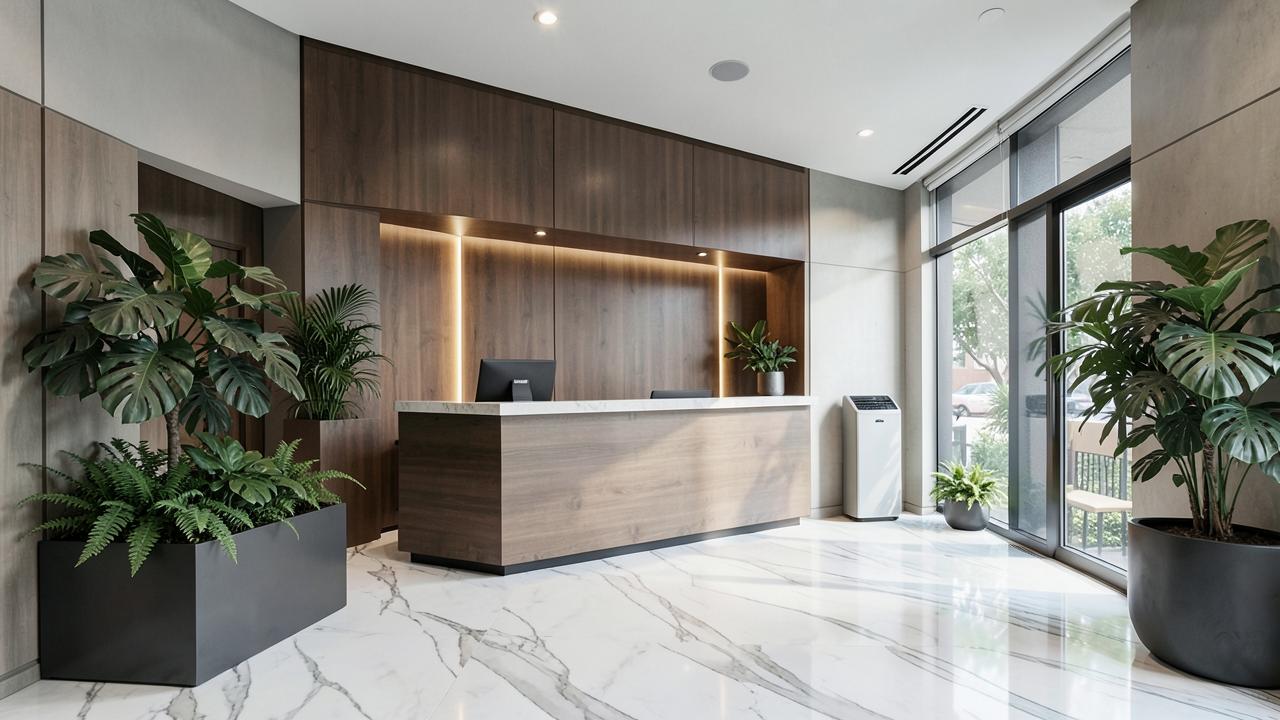
Picture this: you are walking through the marble-clad lobby of a 40-story residential tower in Midtown, and while the visual aesthetic is flawless, the air feels stagnant and lacks the signature identity promised to the board. In the lobby, a small standalone unit hums in the corner, creating a pocket of fragrance that disappears the moment you step toward the elevators or the amenity floor. As you ascend to the higher levels, the transition from the lobby’s artificial scent to the neutral, sometimes stale air of the corridors creates a disjointed experience for residents paying premium rents.
Should you invest in a fleet of independent units scattered across every high-traffic floor, or is it more efficient to tie into the building’s existing mechanical infrastructure? How do you maintain consistency when dealing with stack effect and varying air changes per hour? Does the complexity of HVAC integration outweigh the convenience of plug-and-play hardware?
At Luften, we design and implement engineered ambient systems that bridge the gap between facility management and resident experience. It can be tricky to balance fragrance intensity with mechanical requirements, but there is a right answer for your specific floor plan.
This guide examines the technical and operational differences between HVAC-integrated scenting and standalone diffusion, providing property managers and engineers with a framework for selecting the most effective system for luxury residential towers, covering topics from cold-air nebulization to maintenance scalability.
Coverage Consistency and the Physics of Airflow
The primary difference between these two methods lies in how the scent particles travel through a space. A standalone unit relies on localized airflow, such as a nearby window, a ceiling fan, or the natural movement of people, to disperse fragrance. In a large lobby or a long residential corridor, this often results in "hot spots" where the scent is overpowering near the machine and non-existent twenty feet away. For properties focused on scent marketing, this inconsistency can undermine the brand identity you are trying to establish.
In contrast, an HVAC scent diffuser utilizes the building’s air handling units (AHUs) or fan coil units to distribute fragrance uniformly. By injecting dry-mist particles directly into the supply duct, the scent travels through the entire ventilation network, ensuring that every square foot served by that unit receives the same concentration of fragrance. Using the existing ductwork transforms the entire building’s ventilation system into a delivery mechanism, eliminating the dead zones common with portable equipment.
Cold-Air Nebulization vs. Evaporative Systems
When evaluating hardware for a 40-floor tower, the technology behind the diffusion is as important as the placement. Many standalone consumer-grade units use heat or evaporation, which can alter the chemical profile of the fragrance oil and leave a sticky residue on surfaces. High-end commercial systems, whether integrated or standalone, should utilize cold-air nebulization. This process uses filtered compressed air to break down liquid fragrance into a dry mist of micro-particles that are lighter than air.
These particles are small enough to stay suspended for long periods without falling out of the air stream and coating the interior of your ducts. In a luxury setting, where odor control programs are essential for maintaining a pristine environment, nebulization ensures the scent remains crisp and true to its design. Cold-air nebulization prevents the condensation of oils within the HVAC system, protecting your mechanical components while providing a cleaner scent profile.
Scalability and Maintenance Logistics
Managing a 40-story tower requires a focus on operational efficiency. If you choose standalone units for the lobby, the fitness center, the rooftop lounge, and every elevator bank, your engineering team is now responsible for monitoring and refilling dozens of individual machines. This increases the labor hours required for upkeep and introduces more points of failure. Furthermore, standalone units are visible to residents and guests, which may not always align with the interior design of a high-end property.
An integrated system allows you to centralize the scenting for large zones. A single large-capacity diffuser located in a mechanical room can scent an entire lobby and mezzanine level simultaneously. This setup keeps the hardware out of sight and simplifies the refill schedule. While you are addressing the air quality, it is also a logical time to audit other hidden systems, such as ensuring lift station & ejector pit care is up to date to prevent competing odors from subterranean levels. Centralizing scent delivery within mechanical rooms reduces the labor footprint and keeps the aesthetic focus on the building's architecture rather than the equipment.
Choosing the Right System for Your Property
The decision often comes down to the specific layout of your amenity spaces versus your residential corridors. Standalone units are often ideal for targeted, temporary applications or spaces with independent, non-ducted heating and cooling. They offer flexibility if you need to move the scent to a different area for a building event or a seasonal promotion.
However, for the main lobby, elevator banks, and high-traffic amenity floors in a large tower, an HVAC-integrated system is almost always the superior choice. It provides the seamless, invisible experience that luxury residents expect. By leveraging the building’s engineering, you ensure that the scent is an atmospheric element rather than a noticeable add-on.
Have a question or need support? Our team is here to help — talk to our team and we'll connect you with the right expert.